 (604) 305-2992
 Schedule An Appointment

Ever wonder why your appliance warranty feels like a safety net until you actually need to use it? Let’s dive into the hidden clauses and sneaky fine print that could be costing you hundreds – or even thousands – when your trusty kitchen companion finally gives up the ghost. Picture this: You’re standing in your kitchen in Sardis at 6 AM, coffee maker silent, realizing your morning routine just got hijacked by a broken appliance. You dig out that warranty paperwork with relief, only to discover that your “comprehensive coverage” has more holes than Swiss cheese. Welcome to the appliance warranty trap – where what looks like protection on paper can turn into a financial nightmare in real life. Most of us buy appliances thinking the manufacturer’s warranty or that sweet-talking extended coverage plan will save us from repair headaches. But here’s the thing – warranty companies are in the business of collecting premiums, not necessarily paying out claims. They’ve perfected the art of legitimate-sounding exclusions that can leave you holding the repair bill anyway.
Key Outtakes:
- Standard manufacturer warranties often exclude “wear and tear” items that commonly fail after the first year
- Extended warranty providers frequently require pre-authorization for repairs, adding delays when you need quick fixes
- Many warranties become void if you attempt any DIY repairs or use non-authorized service technicians
- Hidden clauses about “acts of God” and environmental damage can exclude claims for power surge damage or moisture-related issues
- Some warranty companies impose annual claim limits or deductibles that weren’t clearly explained at purchase
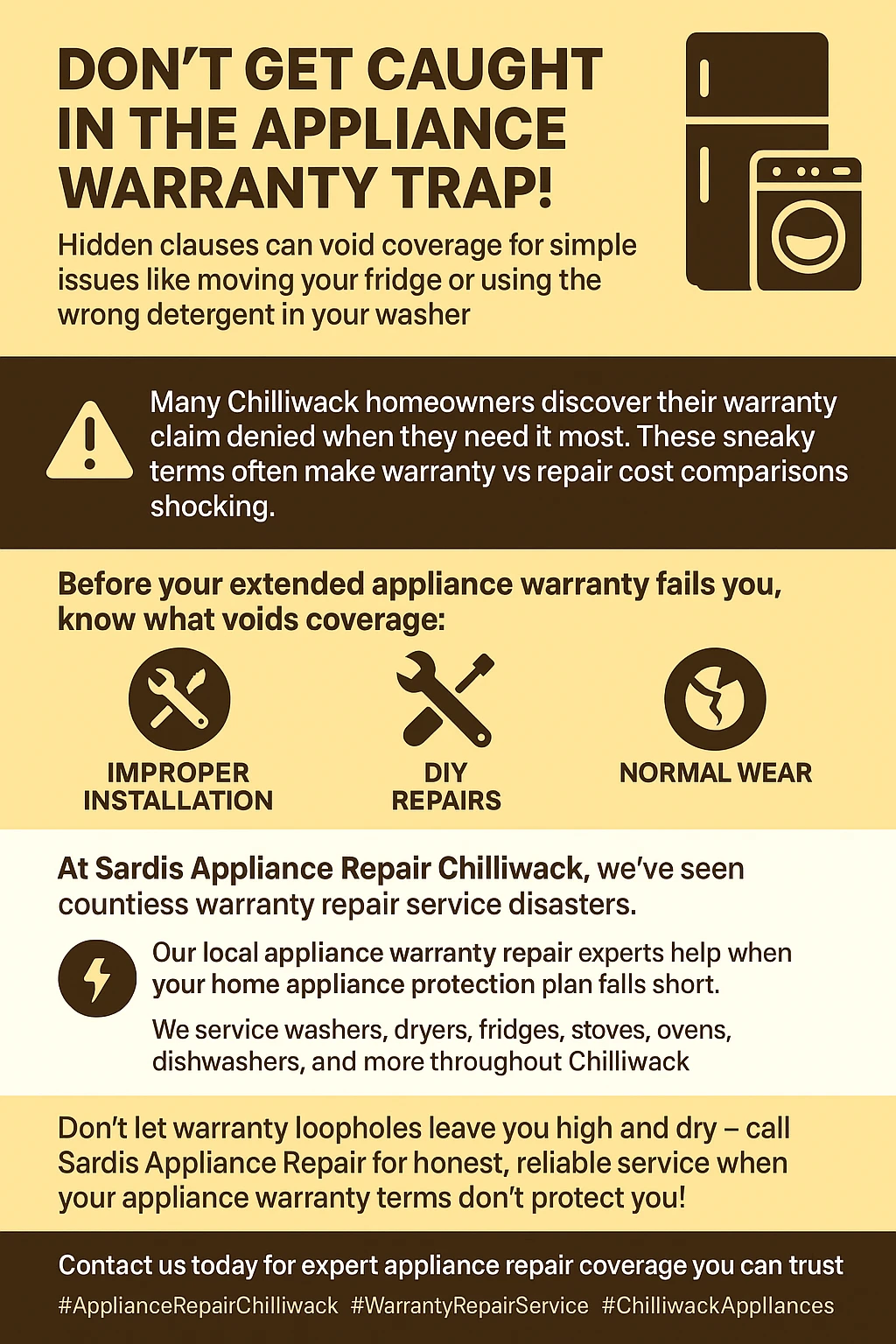
The Fine Print That’s Not So Fine
 Let me tell you about my neighbor in Promontory who learned this lesson the hard way. Her two-year-old dishwasher started leaking, and she confidently called her extended warranty company. Three weeks and four phone calls later, they denied the claim because the leak originated from a “rubber seal” – apparently classified as a “wear item” not covered under her plan. She ended up paying $300 for a repair that should have cost her nothing but the deductible. This scenario plays out thousands of times across Chilliwack every year. Warranty companies have become masters at categorizing essential components as “consumable” or “wear” items. Your refrigerator’s door seals, dishwasher gaskets, oven heating elements, and washing machine drive belts – all the stuff that actually breaks – often fall into these excluded categories. It’s like buying car insurance that doesn’t cover accidents involving rubber tires. The authorization maze represents another costly trap that many homeowners in Yarrow and beyond face regularly. Most extended warranties require you to call their customer service line before any repairs begin. This seems reasonable until you’re dealing with a broken refrigerator in July, watching your groceries spoil while you wait three days for an “authorized technician” to assess the situation. Meanwhile, a local repair service could have fixed the problem same-day, but using them would void your coverage entirely.
When Warranties Work Against You
 Here’s where things get really frustrating – the authorization process often becomes a game of phone tag that favors the warranty company’s bottom line over your convenience. They know that every day you wait costs you money in spoiled food, laundromat visits, or takeout meals. Some homeowners get so frustrated with the delays that they pay out of pocket for immediate repairs, essentially paying twice for the same fix. The “acts of God” exclusions deserve special mention because they’re broader than most people realize. That power surge during last winter’s ice storm that fried your oven’s control board? Sorry, that’s weather-related damage. The humidity from that bathroom renovation that caused your laundry room dryer to develop electrical issues? Environmental damage, not covered. Even normal wear from hard water can be excluded under these clauses, despite being completely predictable in many areas of the Fraser Valley. What really gets me fired up is how warranty companies handle the voided coverage trap. Try to troubleshoot your washer yourself using a YouTube video? Coverage void. Have your handy brother-in-law take a look at your range before calling for service? Coverage void. Use a repair shop that’s not on their “approved” list because they could get there faster? You guessed it – coverage void. These companies have created a system where any reasonable attempt to solve your problem quickly can disqualify you from the coverage you paid for.
The Real Cost of Extended Warranties
Moving beyond the obvious exclusions, let’s talk about the financial mathematics that make extended warranties a losing proposition for most homeowners. Insurance companies have armies of actuaries who calculate exactly how much they need to charge to ensure profitability. When you buy an extended warranty, you’re essentially betting that your appliance will break down more expensively than average, while the warranty company is betting it won’t. The numbers rarely work in your favor, especially when you factor in the hassle costs. A typical extended warranty on a major appliance costs between $200-$500, depending on the coverage level and appliance type. For that same money, you could establish your own “appliance repair fund” and probably come out ahead. Most quality appliances, when properly maintained, don’t require major repairs during their extended warranty period anyway. Annual claim limits represent another hidden gotcha that catches homeowners off guard. Some warranty plans cap total claims at $1,500 or $2,000 per year, regardless of how many covered appliances you own. If your refrigerator compressor fails in March ($800 repair) and your washing machine transmission goes out in September ($700 repair), you might find yourself responsible for part of that second repair despite paying for “complete” coverage. The deductible creep phenomenon has made extended warranties even less attractive over recent years. What used to be $50 service calls have morphed into $100 or even $150 deductibles per incident. When you’re facing a repair that costs $200, paying $150 upfront makes that warranty coverage feel pretty hollow. Some companies have also introduced “diagnostic fees” separate from deductibles, meaning you pay $75 just to have someone confirm what’s wrong, plus the deductible if you proceed with repairs.
Manufacturer Warranties: What They Actually Cover
Understanding what standard manufacturer warranties actually protect can help homeowners set realistic expectations and avoid disappointment when problems arise. Most major appliance manufacturers offer one-year comprehensive coverage that includes parts and labor for manufacturing defects, but the devil lives in defining what constitutes a “defect” versus normal wear. Manufacturing defects typically cover situations where the appliance fails to perform as designed due to faulty components or assembly errors. If your brand-new dishwasher’s pump motor burns out in month six, that’s clearly a manufacturing defect. However, if the rubber door seal starts cracking after eighteen months of normal use, most manufacturers will argue that’s expected wear and tear, not a defect covered under warranty. The geographical limitations of manufacturer warranties can create unexpected complications for residents throughout the Chilliwack area. Some manufacturers require repairs to be performed by factory-authorized service centers, which might mean longer wait times if the nearest authorized dealer is located in Vancouver or other distant cities. While local repair services can often fix problems faster and more conveniently, using them might void your manufacturer warranty during that first year when coverage should be most valuable. Proof of purchase requirements have become increasingly strict, with many manufacturers now requiring not just receipts but also completed warranty registration cards or online registration within specific time frames. Miss that 30-day registration window, and your “full warranty” might be reduced to a parts-only coverage that leaves you paying labor costs out of pocket.
Frequently Asked Questions
Can I repair my appliance myself without voiding the warranty?
Most manufacturer and extended warranties explicitly prohibit DIY repairs, even simple maintenance tasks like replacing water filters or cleaning components. The warranty language typically states that any unauthorized repair attempts will void coverage completely. However, normal maintenance activities specifically outlined in your owner’s manual – like cleaning lint filters or defrosting freezers – won’t affect your warranty status.
What happens if I use a non-authorized repair service during the warranty period?
Using a non-authorized repair service will almost certainly void your warranty coverage for future claims, even if the unauthorized repair wasn’t related to subsequent problems. Warranty companies and manufacturers maintain strict networks of approved service providers and view outside repairs as potential liability risks. If you need faster service than the authorized network can provide, document the emergency nature of the situation and contact the warranty provider first to discuss your options.
Are there any warranties that actually provide good value for homeowners?
Some manufacturer warranties on premium appliance lines offer genuine value, particularly those covering sealed refrigeration systems for 5-10 years or inverter motors on high-end washers. However, third-party extended warranties rarely provide good value when you factor in exclusions, deductibles, and service limitations. Your money is usually better invested in an emergency repair fund or choosing more reliable appliance brands with longer standard warranties.
Wrapping Up
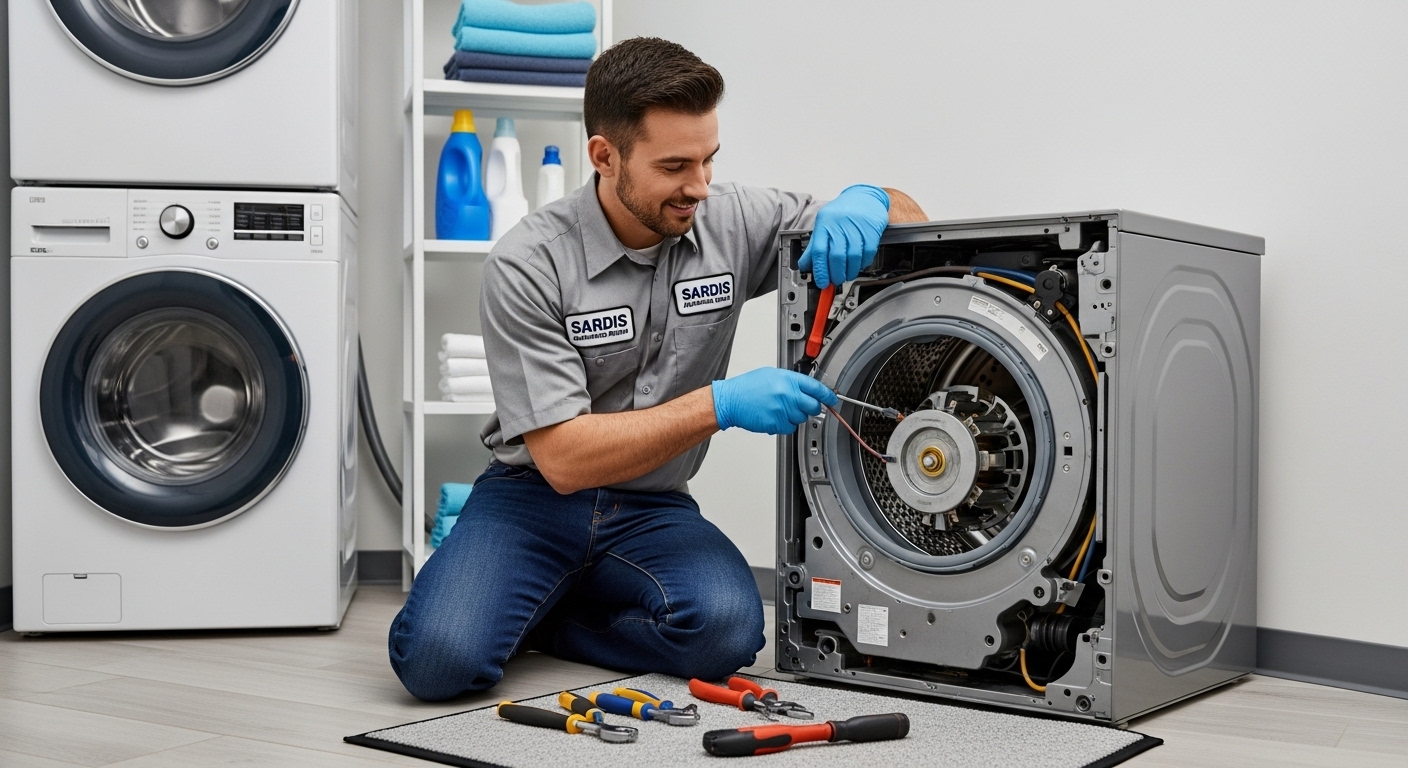 The appliance warranty game is rigged in favor of the companies selling coverage, not the homeowners buying it. Between exclusions for wear items, authorization delays, and coverage-voiding clauses, that “peace of mind” often evaporates right when you need it most. Your best strategy is building an emergency repair fund and finding trustworthy local repair services who can respond quickly when problems arise. When your appliances do break down in Chilliwack, skip the warranty runaround and contact Sardis Appliance Repair Chilliwack for honest, efficient service. Our experienced technicians can diagnose and repair most appliance issues the same day, without the delays and restrictions that make warranty claims such a headache. We believe in transparent pricing and getting your home back to normal as quickly as possible.