 (604) 305-2992
 Schedule An Appointment
Wondering why your appliances decide to stage a revolt right when you need them most during holiday cooking marathons? Picture this: your dishwasher gives up mid-feast prep, your oven throws a tantrum on Christmas morning, and suddenly your kitchen becomes a scene from a holiday horror movie! Thanksgiving prep is in full swing, Christmas dinner planning has reached fever pitch, and New Year’s Eve party preparations are just around the corner. But there’s one uninvited guest that crashes holiday parties more often than your overly chatty uncle – appliance breakdowns. The phenomenon of “feast mode failure” is as predictable as relatives asking when you’re getting married, yet somehow it always catches us off guard. The holiday season puts our trusty kitchen workhorses through their paces like no other time of year. Between turkey marathons, cookie baking sessions, and endless loads of dishes, our appliances work overtime to keep up with our festive demands. Unfortunately, this increased workload often pushes these hardworking machines past their breaking point, leaving families scrambling for solutions when they need their appliances most.
Key Outtakes:
- Holiday cooking demands can push appliances beyond their normal capacity, leading to increased breakdown rates during peak seasons
- Preventive maintenance before holiday seasons can significantly reduce the risk of appliance failures during critical cooking periods
- Understanding common holiday appliance issues helps homeowners prepare backup plans and emergency solutions
- Professional appliance repair services experience their busiest periods during holidays, making advance planning essential
- Simple troubleshooting techniques can resolve minor issues quickly, potentially saving holiday meals from disaster
The Holiday Appliance Breakdown Phenomenon

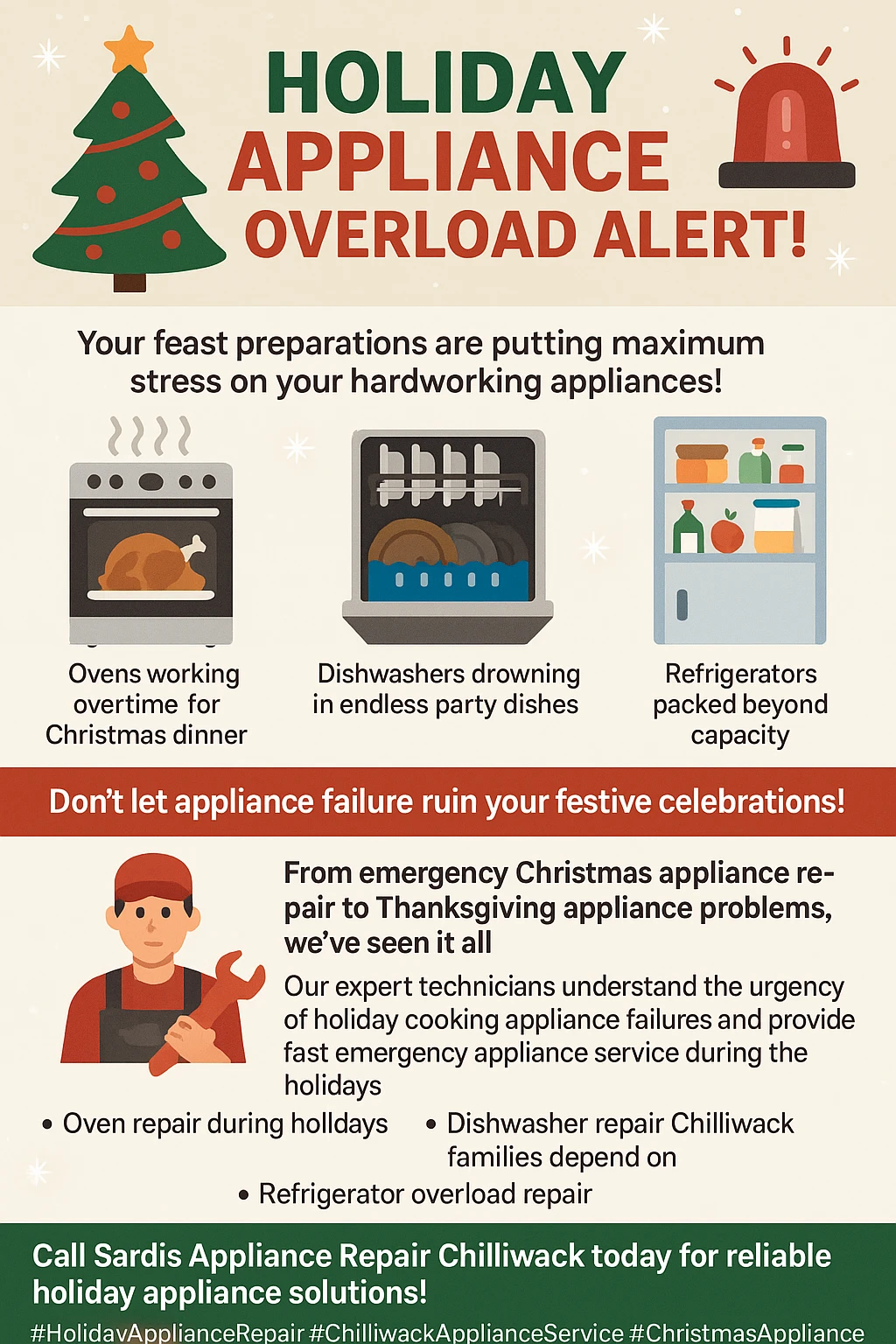
Every appliance repair technician in Chilliwack will tell you the same story – their phones start ringing off the hook the moment families fire up their ovens for holiday feast preparation. This isn’t just coincidence or bad luck striking at the worst possible moment. The reality is that holiday cooking creates the perfect storm of conditions that push appliances to their absolute limits. Think about it from your dishwasher’s perspective. During a typical week, it might handle one or two loads per day, processing standard dinner plates and everyday cookware. But come Thanksgiving week, suddenly it’s facing industrial-sized roasting pans, multiple sets of fine china, and endless waves of prep dishes that would make a commercial kitchen jealous. This dramatic spike in workload, combined with items it rarely encounters, can overwhelm even the most reliable machines. The same principle applies to every major appliance in your kitchen. Your oven, which typically bakes the occasional weeknight dinner, suddenly finds itself running for hours on end, maintaining precise temperatures while juggling multiple dishes. Your refrigerator, already working harder to keep holiday ingredients fresh, gets opened constantly as family members check on marinating meats and chilling desserts. Meanwhile, your range works overtime as every burner gets pressed into service for elaborate sauce preparations and side dishes.
Understanding the Stress Points
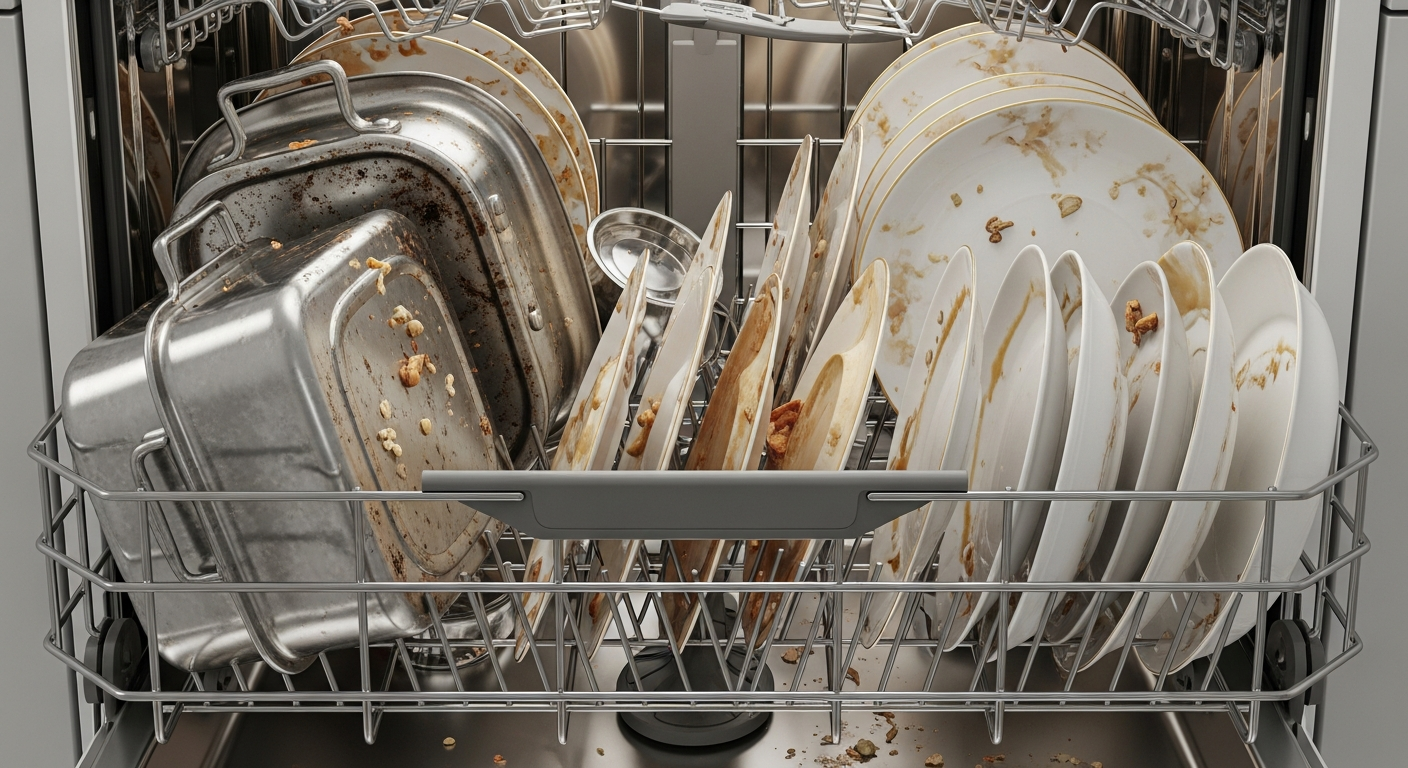
Before diving into solutions, it’s crucial to understand exactly where holiday cooking creates the most stress on our appliances. This knowledge helps homeowners in neighborhoods like Sardis, Greendale, and Yarrow prepare for potential issues before they become full-blown disasters. By identifying these pressure points, families can take preventive measures and develop contingency plans that keep holiday celebrations on track. The most vulnerable component during holiday cooking is often the dishwasher’s drainage system. Holiday meals generate an enormous amount of food debris, from turkey drippings to cranberry sauce remnants, and much of this ends up coating dishes before they reach the dishwasher. Even with careful pre-rinsing, the sheer volume of organic matter can overwhelm filters and clog drainage systems that handle normal loads without issue. Ovens face a different but equally challenging set of stressors during holiday cooking. Extended cooking times at high temperatures can cause heating elements to fail, while the constant opening and closing of oven doors to check on multiple dishes creates temperature fluctuations that force the heating system to work harder than usual. Additionally, spills from overflowing casseroles or dripping roasts can damage oven components or trigger safety shutoffs that leave families with half-cooked holiday meals. Refrigerators experience their own unique holiday challenges. The constant addition of large quantities of warm food forces the cooling system to work overtime to maintain safe temperatures. This increased workload, combined with frequent door openings as family members access ingredients, can push older refrigerators beyond their capacity. The result is often inadequate cooling, temperature fluctuations, or complete system failures that put expensive holiday ingredients at risk.
The Timing Factor
Perhaps the most frustrating aspect of holiday appliance failures is their uncanny ability to strike at precisely the worst possible moment. This isn’t actually bad luck – it’s simple mathematics. Appliances that have been operating normally under typical loads often reveal underlying weaknesses only when pushed to their limits during high-demand periods. A dishwasher with a slightly worn pump might handle regular loads perfectly fine, but the increased debris and longer cycles required during holiday cooking can push that weakened component over the edge. Similarly, an oven with aging heating elements might maintain temperature adequately for everyday cooking but struggle when asked to run continuously for hours during holiday meal preparation.
Prevention Strategies That Actually Work
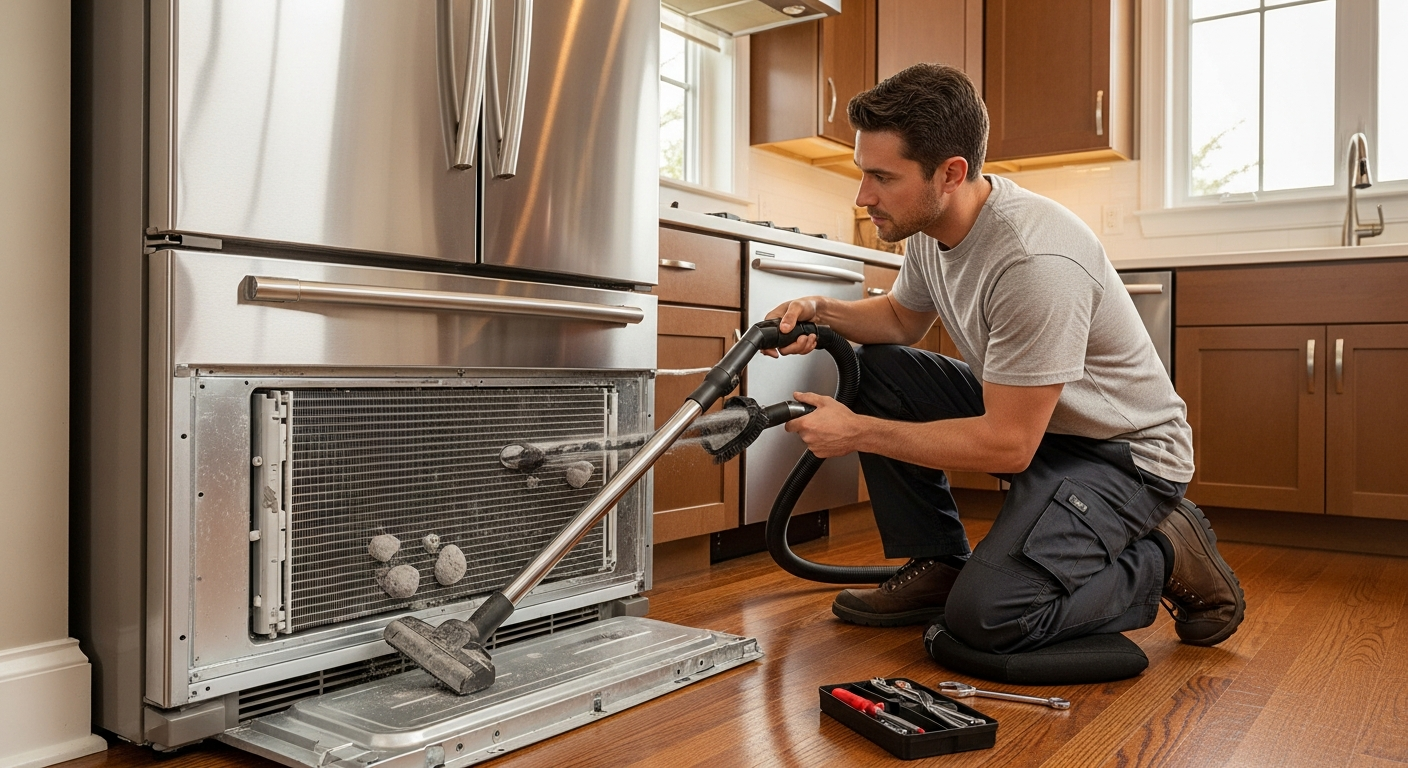
Smart homeowners who want to avoid becoming casualties of the holiday appliance crisis know that prevention beats emergency repairs every time. The weeks leading up to major holidays present the perfect opportunity to give appliances the attention they need to handle increased demands. This proactive approach not only reduces the likelihood of breakdowns but also helps identify potential issues when repair technicians are more readily available and emergency service isn’t required. Starting with the dishwasher, a thorough cleaning of filters and spray arms can prevent the clogs that commonly occur during high-volume holiday washing. Many homeowners don’t realize that their dishwasher has removable components that accumulate food debris over time. A simple monthly cleaning routine becomes even more critical before holiday seasons. Running an empty cycle with dishwasher cleaner or white vinegar helps dissolve mineral buildup and food residue that could cause problems when the machine faces increased demands. Oven maintenance deserves special attention before holiday cooking begins. Professional technicians recommend having oven calibration checked annually, but this becomes especially important before periods of heavy use. An oven that runs ten degrees hot might not affect everyday cooking significantly, but it can ruin a carefully timed holiday meal where multiple dishes require precise temperatures. Additionally, checking door seals and hinges ensures that heat retention remains optimal during those long cooking sessions that characterize holiday meal preparation. Refrigerator preparation involves more than just making space for holiday ingredients. Cleaning condenser coils improves efficiency and reduces the workload on the cooling system when it faces increased demands. This simple maintenance task, often overlooked by busy homeowners, can mean the difference between reliable cooling and system failure when the refrigerator is packed with holiday foods and gets opened frequently by family members checking on meal preparations.
Creating Realistic Expectations
Part of effective holiday appliance management involves setting realistic expectations about what these machines can and cannot handle. Even well-maintained appliances have limits, and understanding these boundaries helps families plan holiday cooking strategies that work within their equipment’s capabilities rather than pushing beyond them. For instance, most residential dishwashers aren’t designed to handle the large roasting pans and oversized cookware that emerge during holiday cooking. Rather than forcing these items into the dishwasher where they might damage spray arms or block water circulation, planning for hand-washing larger items prevents potential problems while ensuring everything gets properly cleaned.
Emergency Troubleshooting for Holiday Disasters
Despite the best preventive measures, appliance failures still happen during holiday cooking, often at the most inconvenient possible moments. When faced with these situations, homeowners need quick troubleshooting techniques that can potentially restore function without waiting for professional repair services. Understanding basic diagnostic steps can mean the difference between a minor hiccup and a completely derailed holiday meal. When a dishwasher stops draining in the middle of holiday cleanup, the first response should focus on the most common culprits rather than assuming major component failure. Checking for visible clogs in the drain area often reveals blockages from food debris that can be removed manually. Additionally, ensuring that any connected garbage disposal is clear and functioning properly eliminates another common source of drainage problems that become more frequent during periods of heavy use. Oven failures during holiday cooking require a systematic approach to identify whether the problem is minor and fixable or requires professional intervention. If an oven stops heating, checking the circuit breaker and ensuring proper electrical connections often resolves issues caused by power fluctuations during periods of high electrical demand. For gas ovens, verifying that pilot lights are functioning and gas supply is adequate addresses the most common failure points that affect heating performance. Refrigerator problems during holiday cooking often manifest as inadequate cooling or temperature fluctuations that put food safety at risk. Before assuming component failure, checking that vents aren’t blocked by holiday ingredients and ensuring door seals are properly closing can restore normal operation. Additionally, temporarily reducing the internal load and minimizing door openings gives the cooling system a chance to recover from the increased demands of holiday food storage.
When to Call for Professional Help
Recognizing the difference between issues that homeowners can address themselves and problems that require professional intervention prevents minor issues from becoming major disasters. During holiday periods, repair technicians prioritize emergency calls, but understanding what constitutes a true emergency helps ensure that professional resources are available for situations that genuinely require immediate expert attention. If basic troubleshooting doesn’t restore appliance function within a reasonable timeframe, or if any safety concerns arise during the diagnostic process, professional repair becomes necessary. Additionally, any situation involving gas appliances, electrical components, or potential water damage should be handled by qualified technicians rather than attempted as do-it-yourself repairs.
Frequently Asked Questions
Why do appliances break down more often during holidays?
Holiday cooking significantly increases the workload on kitchen appliances beyond their normal operating parameters. Dishwashers process larger items and more debris, ovens run for extended periods at high temperatures, and refrigerators work harder to cool large quantities of food while being opened more frequently. This combination of increased demand and unusual usage patterns can push appliances beyond their limits, revealing underlying weaknesses that don’t appear during normal use.
Can I prevent holiday appliance breakdowns?
While you can’t eliminate all risks, preventive maintenance significantly reduces the likelihood of holiday failures. Simple steps like cleaning dishwasher filters, checking oven calibration, and cleaning refrigerator coils before holiday cooking seasons help ensure appliances can handle increased demands. Additionally, understanding your appliances’ limitations and planning cooking strategies accordingly prevents overloading that commonly leads to breakdowns.
What should I do if my oven fails on Christmas morning?
First, check basic issues like circuit breakers and gas supply before assuming major component failure. If simple troubleshooting doesn’t resolve the problem, consider alternative cooking methods like slow cookers, countertop ovens, or even outdoor grills for portions of your meal. Many holiday dishes can be adapted to different cooking methods, and having backup plans prevents complete meal disasters when primary appliances fail.
Are holiday appliance repairs more expensive?
Emergency repairs during holidays may carry premium pricing due to increased demand and limited technician availability. However, many reputable repair companies maintain standard pricing year-round. The key is planning ahead and addressing maintenance needs before peak holiday periods when possible, avoiding the need for emergency service calls during high-demand times.
Wrapping Up
Holiday appliance failures don’t have to derail your festive celebrations, but they require preparation and realistic expectations about what your kitchen equipment can handle. By understanding the increased demands that holiday cooking places on appliances and taking preventive measures before peak cooking seasons, families can significantly reduce the risk of feast-mode failures that turn joyous occasions into stressful disasters. When appliance issues do arise during your holiday preparations, remember that Sardis Appliance Repair Chilliwack stands ready to help restore your kitchen to working order. Our experienced technicians understand the urgency of holiday repairs and work quickly to get your appliances back in service, ensuring your celebrations can continue without major disruption.