 (604) 305-2992
 Schedule An Appointment
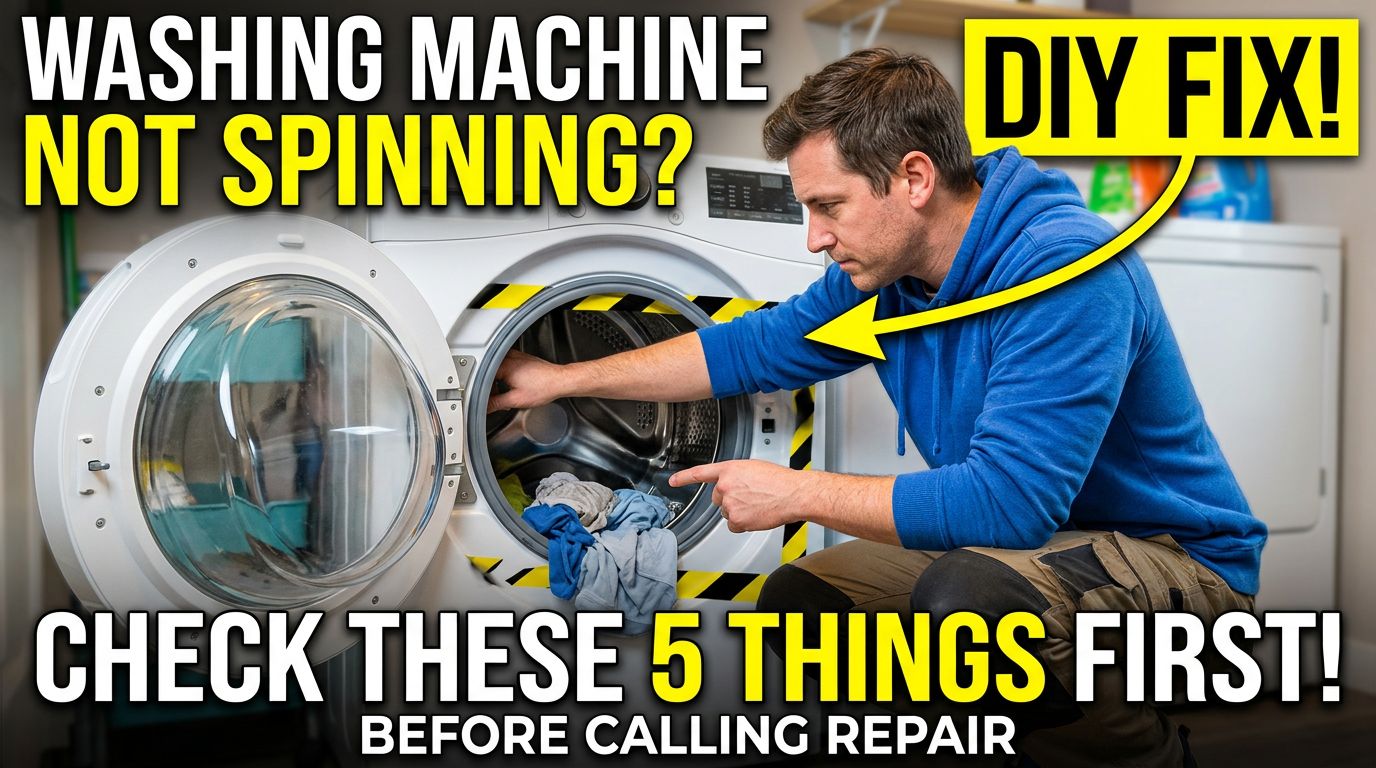
Your washing machine just finished its cycle, but your clothes are soaking wet and the drum barely moved – that’s a frustrating problem, and one that’s more common than you’d think. This guide walks you through the most likely reasons a washing machine stops spinning properly and what you can check yourself before picking up the phone. Chiliwack homeowners deal with hard water, older homes, and appliances that work hard year-round. A washing machine that isn’t spinning right can mean damp laundry sitting too long, overworked dryers, and a laundry routine that grinds to a halt. At Sardis Appliance Repair Chiliwack, we hear about this problem regularly – and the good news is that a surprising number of spin issues have simple causes that you can sort out without a service call. That said, some spin problems do need a professional. The trick is knowing which is which. Let’s work through the most common causes, starting with the easiest checks first.
Key takeaways
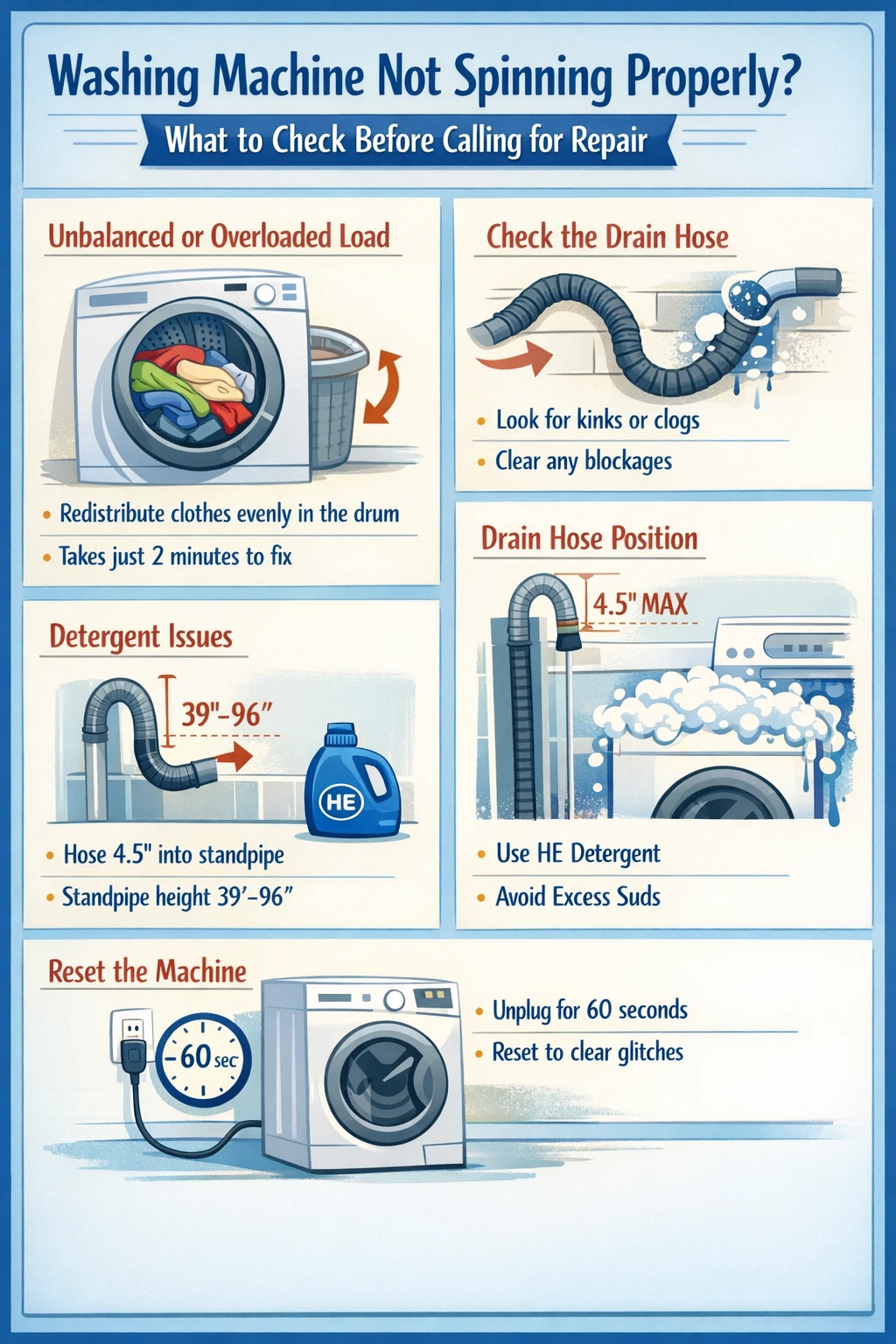
- An unbalanced or overloaded load is the most common reason a washing machine stops spinning, and it’s usually a two-minute fix.
- A kinked or clogged drain hose can prevent your washer from spinning at all, because the machine won’t spin until the drum drains first.
- If your drain hose is installed into the standpipe, it should extend only about 4.5 inches in, with the standpipe between 39 and 96 inches high – anything outside that range can cause draining and spin issues.
- Too much detergent, or the wrong type, creates excess suds that can stop the spin cycle – always use HE detergent in high-efficiency machines and measure carefully.
- A simple machine reset – unplugging for 60 seconds – clears many minor electronic glitches and is worth trying before anything else.
- Repair costs for spin-related issues typically run between $150 and $500 depending on the component; if the repair estimate exceeds 50% of the cost of a comparable new machine, replacement is worth considering.
Why your washing machine isn’t spinning: the short answer
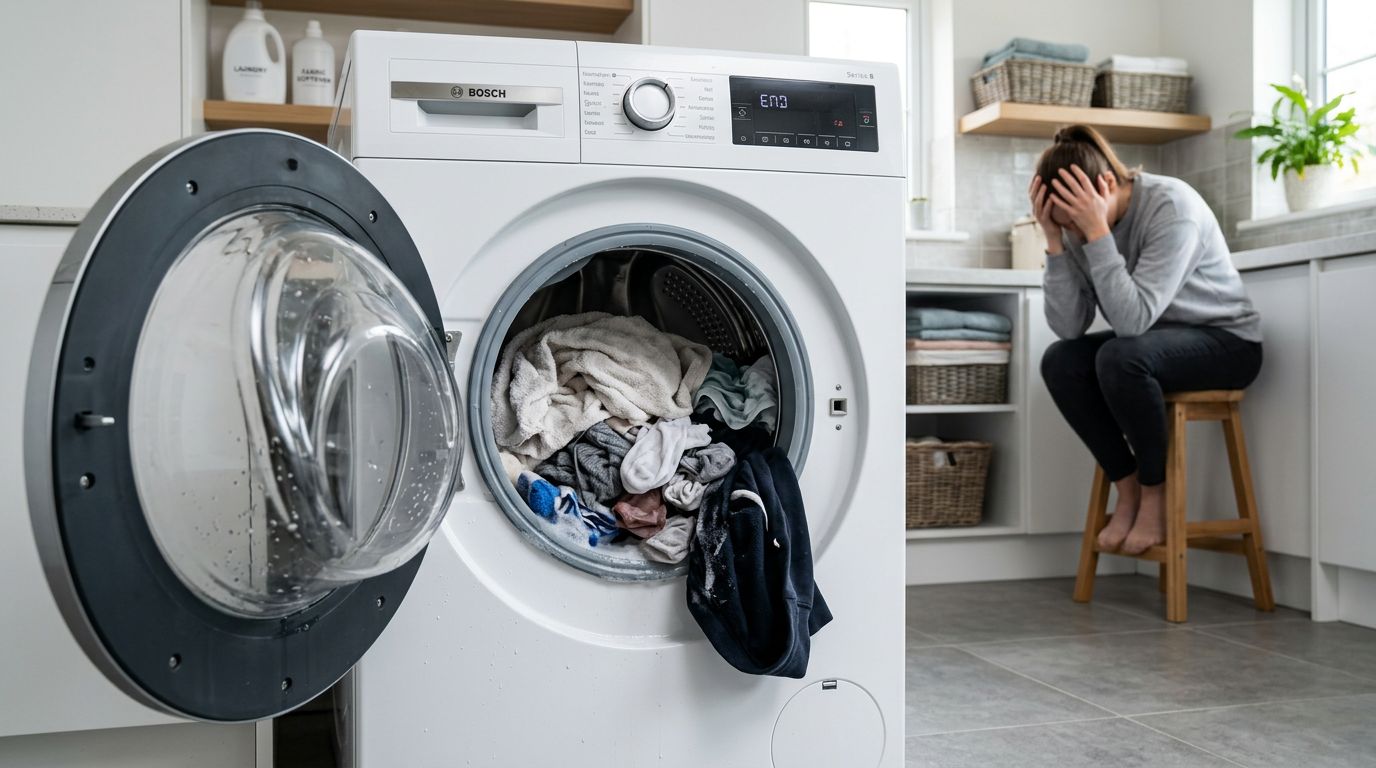 Most of the time, a washing machine not spinning comes down to one of a handful of causes: an unbalanced load, a blocked drain, an unlevel machine, or the wrong cycle setting. These are the things to check first. Mechanical failures – a worn drive belt, a broken lid switch, a failing motor – do happen, but they’re usually not the first explanation. If your clothes are coming out soaking wet but the machine seems to be running otherwise, the problem is almost always either drainage or spin speed. If the drum isn’t moving at all, you’re more likely looking at a lid switch, a power issue, or an internal component that needs attention. We see this fairly often: someone has accidentally selected a delicate or hand wash cycle, which spins slowly by design. The machine isn’t broken – it’s doing exactly what it was told. A quick cycle change to something like Normal or Heavy Duty, or running a dedicated Drain and Spin cycle, clears it right up.
Start here: the easy checks
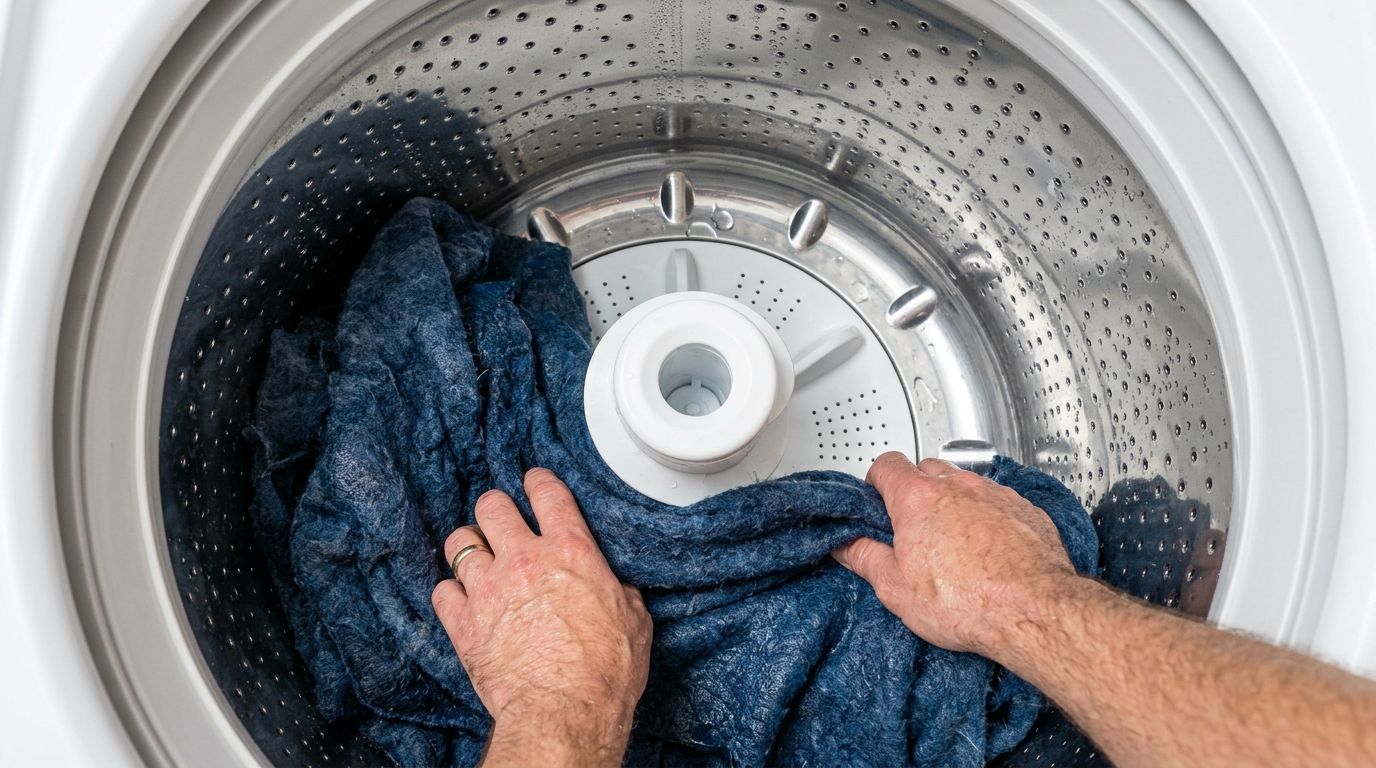 Before pulling the machine away from the wall or calling anyone, run through these basics. Most spin problems are solved at this stage. First, check your load. A single bulky item – a comforter, a pair of jeans, a thick bath towel – can shift to one side of the drum and throw the whole thing off balance. Modern washers have sensors that detect this and will slow down or stop the spin to protect the machine’s bearings. It’s not a malfunction. Open the lid, redistribute the laundry evenly around the drum, and try again. If you’re washing one large item, throw in a second damp item to help balance the weight. Overloading does the same thing in a different way. If the drum is packed too tightly, clothes can’t move freely and the machine may trip its own safety systems. As a general rule, fill the drum no more than three-quarters full. For heavy items like towels or denim, fill it even less. Next, look at your detergent. Too much of it – or regular detergent in an HE machine – creates a foam buildup that confuses the machine’s sensors and can actually prevent draining and spinning. The machine essentially pauses to let the suds settle. Use HE detergent if your machine requires it, and measure according to the package directions. In areas with soft water, you typically need even less than the label suggests.
Check the drain before anything else mechanical
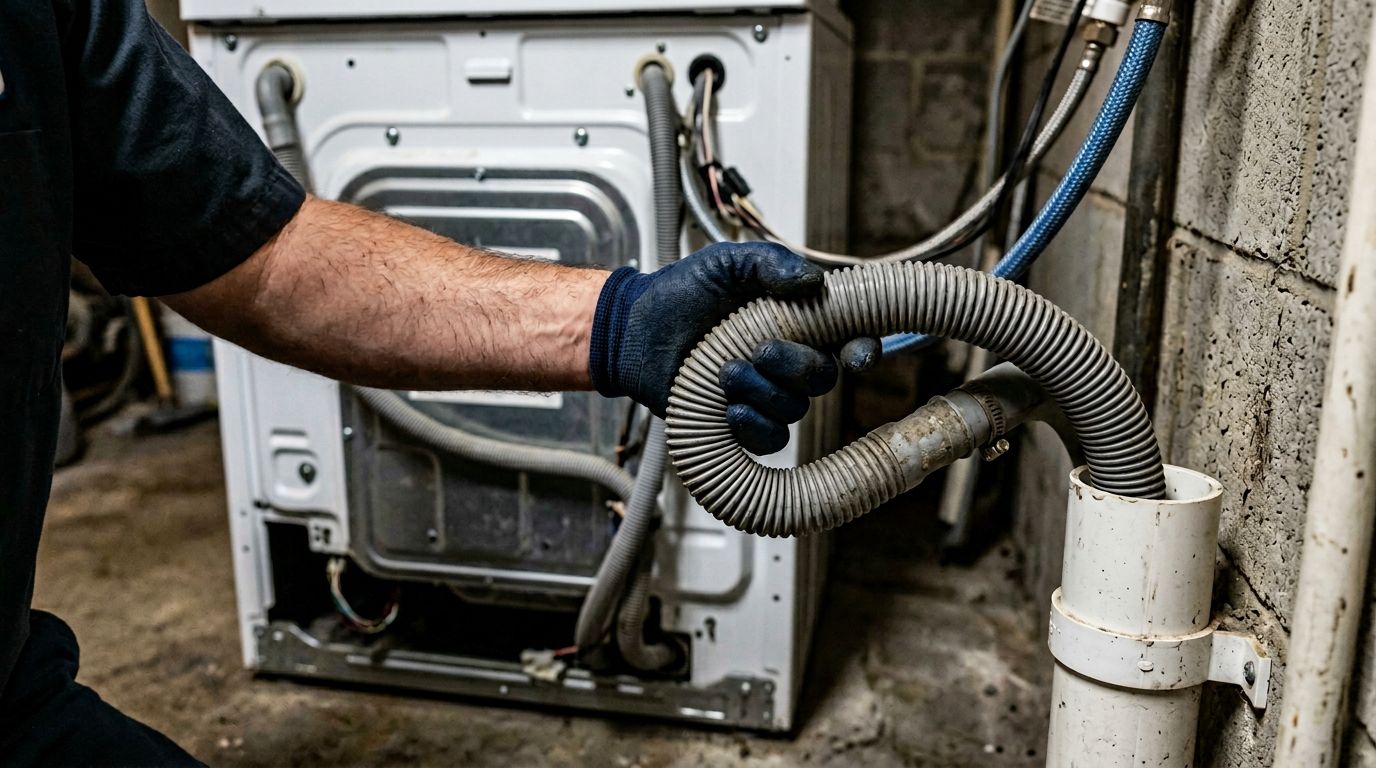 Here’s something a lot of people don’t realize: your washer won’t spin until it drains. The machine is designed this way on purpose – spinning a drum full of water doesn’t remove moisture from your clothes, it just sloshes everything around. So if there’s standing water left in the drum, the spin cycle either won’t start or won’t complete. Pull the machine away from the wall and look at the drain hose. It’s the corrugated hose that runs from the back of the machine into your standpipe or laundry sink. Check for obvious kinks – these are common when a machine gets pushed back too close to the wall. A kinked hose restricts water flow enough to stop draining entirely. If the hose looks fine, the blockage may be inside it. Coins, lint, small pieces of fabric, and hair ties are the usual culprits. You’ll want to unplug the machine and turn off the water supply before disconnecting the hose. Have a bucket ready – there’s usually water in there. A straightened wire hanger works well for clearing debris from inside the hose. Front-loading machines also have a drain pump filter, usually behind a small access panel at the bottom front of the machine. This filter catches debris before it reaches the pump, and it needs to be cleaned periodically. If yours hasn’t been checked in a while, that’s a good place to look. A blocked filter can cause the machine to drain slowly, trigger mid-cycle stops, and in some cases produce a faint burning smell near the pump area. We get a fair number of calls from homes in Sardis and Vedder Crossing about exactly this – older laundry rooms where the drain setup hasn’t been touched in years and a partial blockage has been quietly building up.
Level the machine and check the door latch
An unlevel washing machine is more disruptive than most people expect. If the feet aren’t making solid contact with the floor, the machine rocks during the spin cycle. Most modern washers will detect this wobble and reduce spin speed or stop altogether – again, to protect the drum bearings. It can feel like a mechanical failure when it’s actually just a leveling issue. With the machine empty and switched off, push gently on diagonal corners. If you feel any rocking or movement, the feet need adjustment. Most machines have adjustable front feet that screw up or down by hand, and rear feet that self-adjust when you tilt the machine forward slightly. Check your owner’s manual for the specific method for your model. A spirit level placed on top of the machine is the most reliable way to confirm you’ve got it right. The door or lid latch is the other quick check here. Washing machines are built with safety interlocks that prevent spinning unless the door or lid is confirmed closed and locked. On front-loaders, look at the door latch assembly and make sure nothing is caught in it. On top-loaders, the lid switch or lid lock needs to make positive contact when the lid closes – listen for a click. If you don’t hear it, or if the switch feels loose, that component may need replacing. It’s one of the more common repairs on older top-load machines, and it’s generally not expensive.
When it’s something more serious
If you’ve worked through all of the above and the machine still isn’t spinning, you’re likely dealing with a component failure. These are the main ones to know about. A worn or broken drive belt is common in older top-loaders. The belt connects the motor to the drum, and over time it can stretch, slip, or snap. If you hear the motor running but the drum isn’t turning, this is a likely candidate. Replacing a drive belt usually means accessing the back or bottom of the machine, which varies quite a bit by make and model. Some are straightforward; others are genuinely awkward. Motor coupling failure is another one we see in direct-drive top-loaders. The coupling is a rubber or plastic piece that connects the motor to the transmission. It’s designed to break under excessive strain to protect the motor – which means if it fails, something has been working too hard (usually an overloaded machine, repeatedly). Replacing it is a relatively minor repair if you can get to it. On front-loaders and newer digital inverter machines, the motor driver board or inverter board is worth considering if the drum attempts to start but immediately stops with a jerk or shudder. This is a more involved diagnosis, and typically needs a technician with the right tools to confirm before you start ordering parts.
LG and Samsung machines: a note on error codes
If you have an LG or Samsung front-loader, check the display panel for error codes before doing anything else. These machines are quite communicative – they’ll often tell you exactly what they think is wrong. An unbalanced load code, a drain error, or a door latch fault will appear as a specific alphanumeric code on the display. For LG machines, you can run a quick test: press power, select Rinse and Spin, start the cycle, let it run through the rinse agitation, then pause, power off, power on, and select a high spin speed to run spin-only. If the drum spins fine on its own, the issue is load-related rather than mechanical. LG’s support documentation has model-specific guidance for most error codes. For Samsung’s digital inverter models, it’s worth knowing that the newer BLDC motors don’t use a traditional start capacitor – so if someone tells you it’s “probably a capacitor,” that doesn’t apply to these machines. Issues with the motor on these models typically point to the inverter board. Replacement is usually the recommended path when the board is potted (encased in a protective substrate), since component-level repair on a potted board is genuinely difficult without specialized equipment.
Older Chilliwack homes: a few extra things to watch
Homes in areas like Promontory and parts of older central Chiliwack sometimes have laundry setups that create specific problems. Standpipes that are too short, drain hoses that have been looped in ways that allow water to siphon back into the drum, or slightly unlevel floors from foundation settling – these are all things we see come up regularly in home repair calls. If your machine seems to drain partially and then fill back up slightly before the spin cycle, a too-low standpipe or an improperly looped drain hose is often the reason. The drain hose should form a proper U-shape at the standpipe to prevent back-siphoning. ENERGY STAR’s guidance on washer installation covers some of these setup requirements if you want to confirm your installation is correct. It’s also worth knowing that hard water accelerates wear on internal pump components over time. If your machine is on the older side and has never had its drain pump filter cleaned, that maintenance alone can sometimes resolve a spin problem that’s been building gradually.
Frequently asked questions
There are a few questions that come up again and again once people start troubleshooting a washing machine not spinning. Here are the honest answers.
Why is my washer draining but still not spinning?
A partial drain pump blockage is often behind this. The machine drains enough water to satisfy some sensors but not enough to trigger the spin cycle properly. Check the drain hose for kinks and clear the pump filter. If those are clean, a faulty pressure switch or control board may be sending the machine incorrect signals about water levels – that’s a repair job for a technician.
Can I reset my washing machine to fix a spin problem?
Yes, and it’s always worth trying first. Unplug the machine from the wall, wait 60 seconds, then plug it back in. This clears minor electronic faults and control board glitches. After the reset, run a Drain and Spin cycle and see what happens. If the machine spins normally, the issue may have been a one-time power interruption or sensor hiccup. If it still won’t spin, the reset has at least narrowed things down.
Is it worth repairing or should I replace the machine?
A practical rule of thumb: if the repair estimate exceeds 50% of what a comparable new machine would cost, replacement usually makes more financial sense. Washing machines generally last 10 to 14 years with reasonable care. If yours is approaching that range and needs a significant repair – a new motor, a control board, or bearing replacement – that’s a reasonable point to consider upgrading instead. If the machine is only a few years old and the fix is a lid switch or a belt, repair is almost always the right call.
What does it mean when my washer signals an unbalanced load repeatedly?
It means the drum is detecting uneven weight distribution and stopping to protect the bearings. This happens most often with heavy single items or with loads that have clumped together. Pause the cycle, redistribute the load evenly around the drum, and restart. If it keeps happening, check that the machine is sitting level on all four feet – an unlevel machine will read false imbalances even with a well-distributed load.
Wrapping up
A washing machine drum not spinning is genuinely one of those problems that looks worse than it often is. Start with the simple stuff: check your load balance, look at the drain hose, confirm the machine is level, and try a reset. A significant portion of spin problems get resolved at that stage with no parts and no service call needed. Where things get more involved – a faulty lid switch, a worn belt, a motor board issue – those repairs are usually straightforward for a qualified technician and don’t necessarily mean the machine is finished. If you’ve worked through the basics and you’re still stuck, or you’d rather not pull the machine apart yourself, that’s exactly what we’re here for. At Sardis Appliance Repair Chiliwack, we handle washer repair, dryer repair, and a full range of appliance work across Chiliwack and the surrounding area. Give us a call and we’ll help you figure out what’s actually going on and what makes the most sense to do about it.