 (604) 305-2992
 Schedule An Appointment
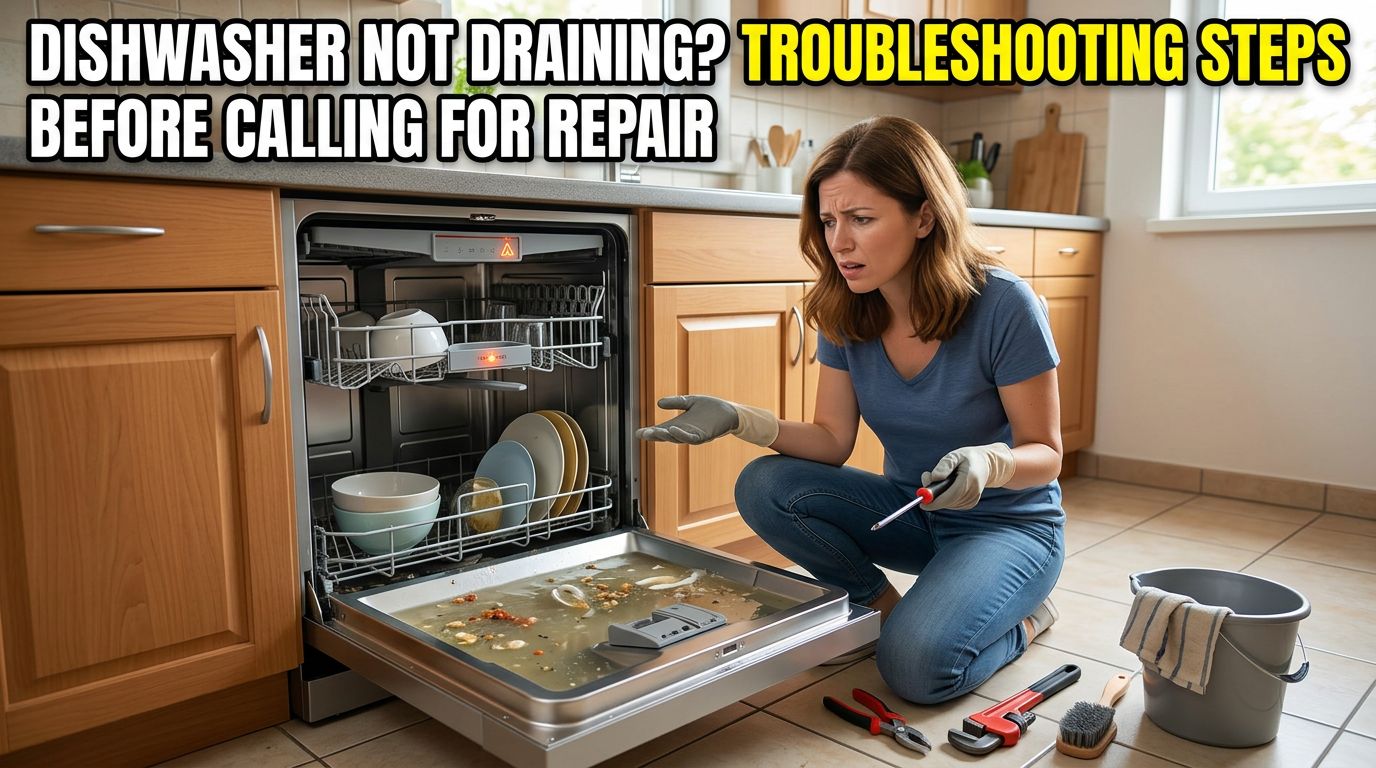
You open the dishwasher after a full cycle, reach in for a plate, and your hand hits a pool of warm, murky water sitting at the bottom. This guide walks you through every realistic cause and fix, in plain language, so you can sort it out yourself before picking up the phone. Dishwasher drainage problems are more common than most people expect, and in the Chiliwack area, we see a few patterns come up again and again. Hard water deposits, food debris from heavier meals, and older plumbing connections under the sink all play a part. At Sardis Appliance Repair Chiliwack, we field calls about standing water in dishwashers regularly, and the honest truth is that a good chunk of those calls turn out to be something the homeowner could have handled themselves with about twenty minutes and a toothbrush. That said, not every drainage issue is a simple fix. Some point to a failing pump or a plumbing problem that goes beyond the appliance. Knowing how to tell the difference saves you time, money, and the frustration of doing the wrong repair first.
Key takeaways
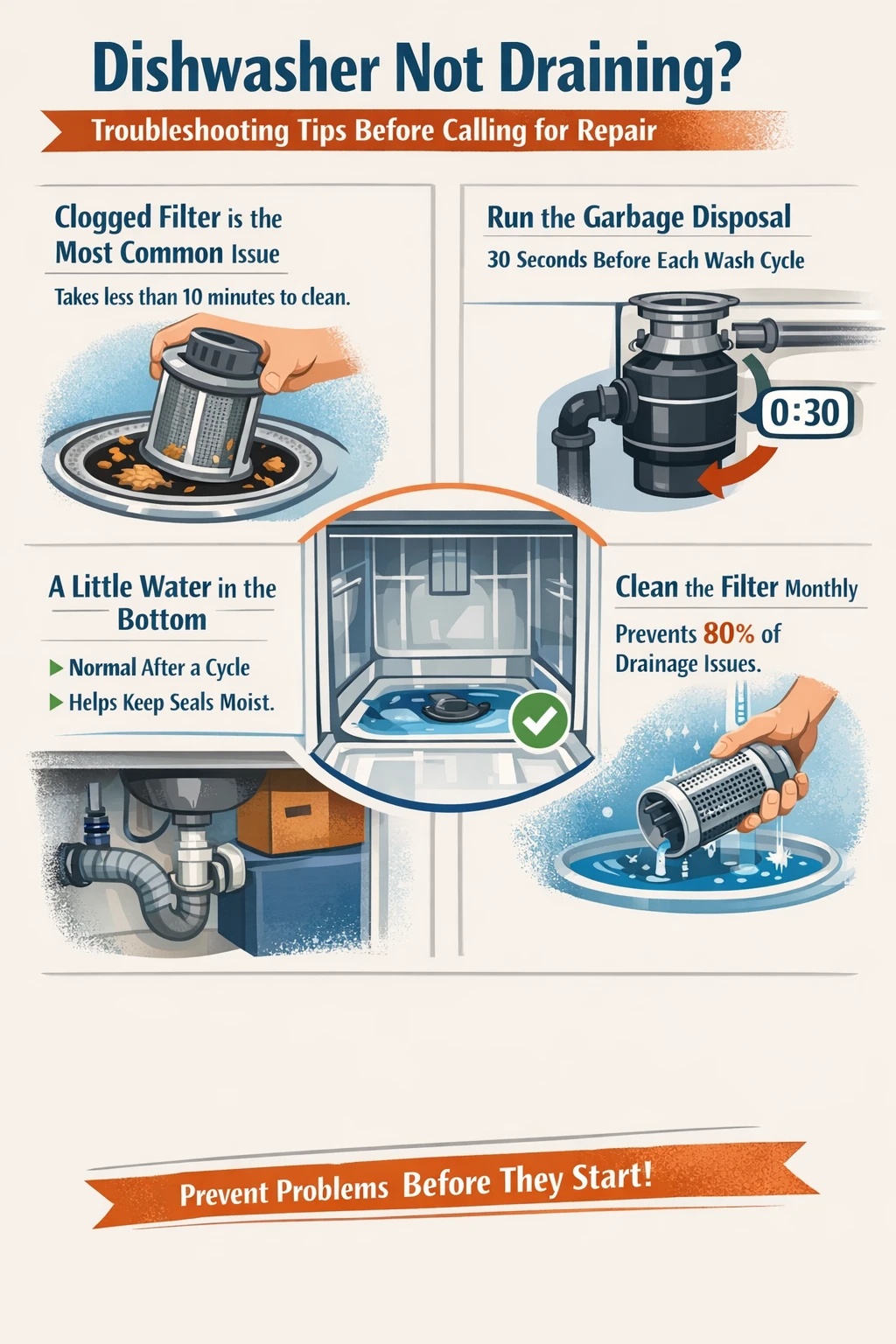
- A clogged filter is the single most common reason a dishwasher won’t drain, and cleaning it takes less than ten minutes.
- A small amount of water sitting in the filter area after a cycle is completely normal and helps keep seals from drying out.
- If your dishwasher drains through a garbage disposal, running the disposal before starting a wash cycle prevents many backups.
- A kinked or blocked drain hose can restrict flow entirely, and this is often caused by items stored under the sink shifting against the hose.
- If the drain pump makes no sound at all during the drain cycle, you are likely looking at a mechanical failure that needs a technician.
- Cleaning the filter once a month is the single most effective maintenance habit for preventing drainage problems.
Why your dishwasher isn’t draining
Most of the time, a dishwasher not draining comes down to one of three things: a clogged filter, a problem with the garbage disposal connection, or a blocked drain hose. These are the places to start, and in our experience, one of those three resolves the issue about eighty percent of the time. The other cases involve the drain pump, the air gap, or a plumbing issue that sits further down the line. Your dishwasher’s drain system works like this: a drain pump pushes water out through a drain hose, which connects to either your sink’s garbage disposal or directly to the sink drain. A filter near the bottom of the tub catches food particles before they reach the pump. If you have an air gap installed on your countertop or sink deck, water passes through that too. Block any one of those points, and water has nowhere to go. One thing worth knowing before you start: a small pool of water sitting in the recessed filter area after a cycle is not a malfunction. That’s by design. It keeps the door seals from drying out and cracking. What you don’t want to see is water covering the entire bottom of the tub after a complete cycle. That’s the version that needs attention.
Step-by-step: what to check before calling anyone
 Before anything else, unplug the dishwasher or switch off the breaker. Then pull out the bottom rack and take stock of what you’re dealing with.
Remove the standing water first
You won’t be able to see anything useful with a tub full of dirty water. Scoop most of it out with a cup into a bucket, then use old towels or a wet-dry shop vac to get the rest. A turkey baster works surprisingly well for the last inch or so. Put dry towels around the base of the machine on the floor while you work, because some water will find its way out.
Clean the filter
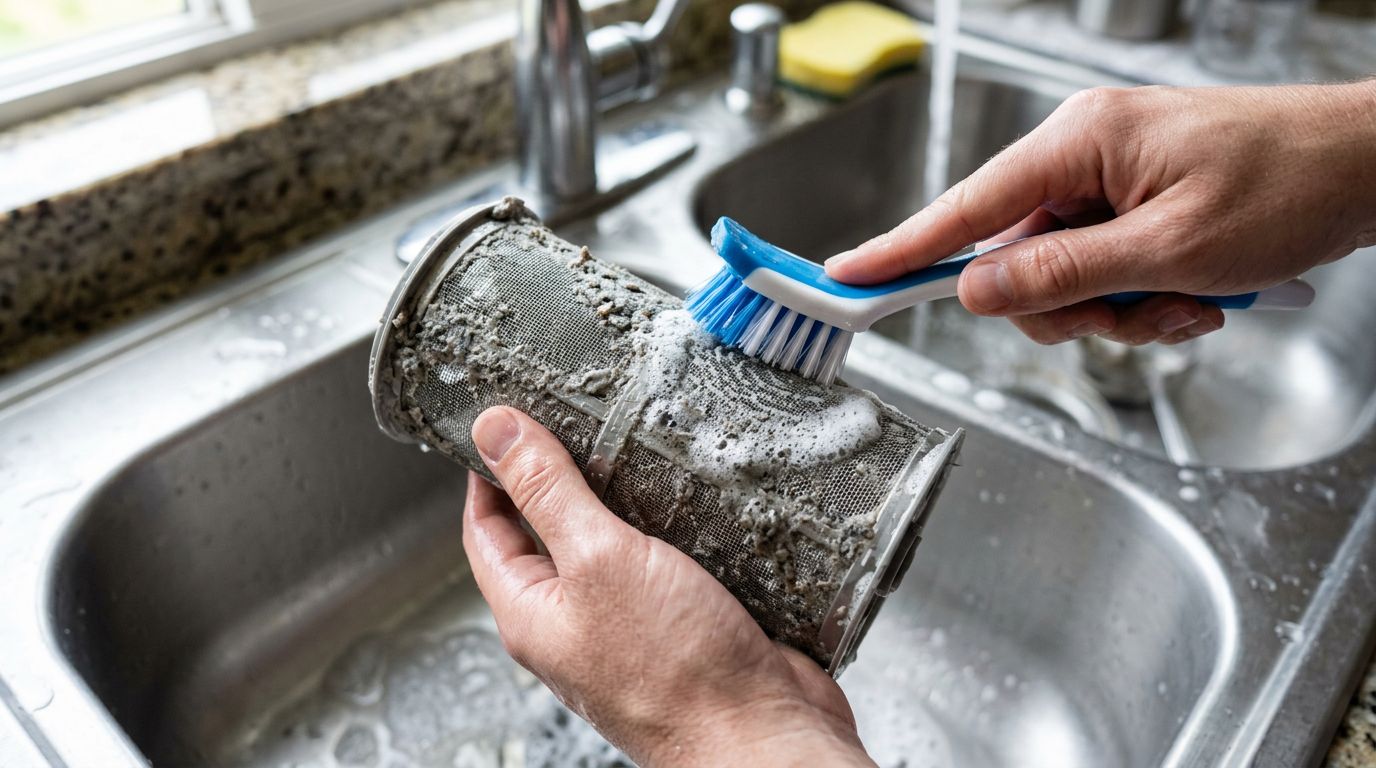
This is where most people find their answer. The filter sits at the bottom of the tub, usually near the base of the lower spray arm. On most modern dishwashers, you twist it counterclockwise and lift it straight out. No tools needed. If yours requires a screwdriver, your owner’s manual will show you where. Pull the filter and hold it under a running tap. You’ll probably see a grey paste of food, grease, and soap residue blocking the mesh. Scrub it gently with an old toothbrush and warm, soapy water until the mesh is clear. Don’t use anything abrasive or you’ll damage the fine mesh material. Then look down into the sump area where the filter was sitting. If you see chunks of food, glass, or other debris, carefully remove them. Use gloves because broken glass in that area is not unusual. Reinstall the filter, making sure it seats and locks properly. A loose filter lets debris reach the pump and causes bigger problems down the road.
Check the garbage disposal connection
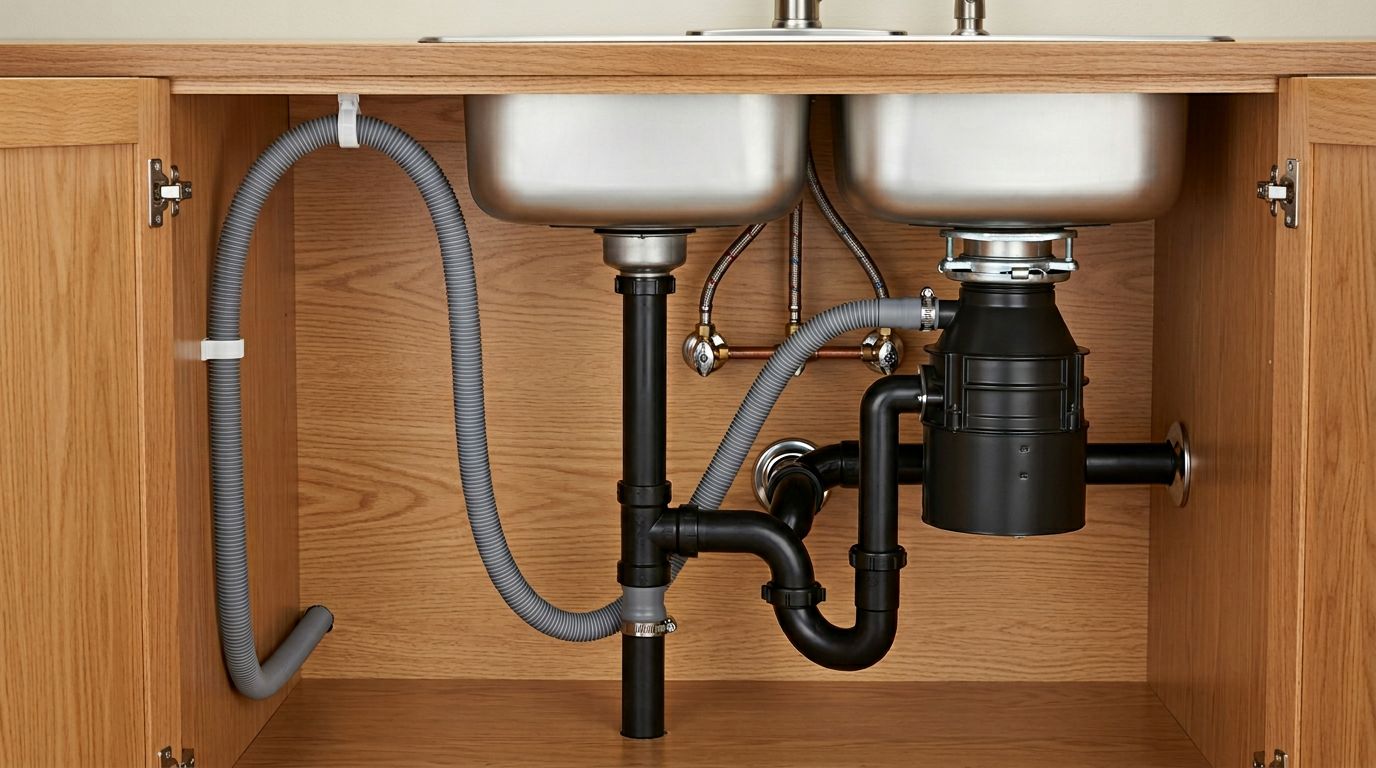
If your dishwasher drains through a garbage disposal under the sink, that disposal needs to be clear before the dishwasher can drain into it. Run the disposal for about thirty seconds with cold water before you run a wash cycle. This is honestly one of those habits that prevents a lot of headaches. There’s one other thing to check here, and it catches people off guard. If a new garbage disposal was recently installed in your kitchen, a small knockout plug inside the disposal’s dishwasher inlet port may never have been removed. That plug is meant to be knocked out during installation, but it sometimes gets missed. The result is a drain connection that is completely sealed. If you or someone else recently swapped out the disposal and the drainage problem started right after, this is almost certainly why.
Inspect the drain hose
The drain hose runs from the back of the dishwasher to the disposal or sink drain. It can kink if the machine was shifted during installation or if items stored under the sink have pressed against it. A kinked hose acts like a pinched garden hose: water builds up and goes nowhere. Pull the dishwasher out far enough to see the full length of the hose. Look for bends or tight curves. While you’re there, check that the hose has a high loop, meaning it rises up close to the underside of the counter before descending to the drain connection. Without that high loop or an air gap, dirty water can siphon back into the machine between cycles. If you want to check for an internal clog in the hose, disconnect it from the disposal or sink drain end, hold it over a bucket, and see if water flows through. A bone fragment, a piece of broken chopstick, or even a wad of grease can completely block a drain hose and be nearly invisible from the outside.
Check the air gap
Not every installation includes an air gap, but if you have one, it’s that small cylindrical fixture on the top of your sink deck, usually near the faucet. Remove the decorative cap and look inside. Rice, food sludge, and debris can pack into it and block airflow, which prevents proper draining. Clean it out with a small brush or a piece of wire.
When the filter and hose check out fine
If you have cleaned the filter, confirmed the disposal is clear, checked the hose for kinks and clogs, and the dishwasher still won’t drain, you are moving into territory that is harder to resolve without some disassembly. The drain pump is the next suspect. During the drain portion of a cycle, you should hear a low hum or whirring sound. If you hear nothing at all, the pump motor may have failed. If you hear a grinding or buzzing noise without any water moving, something is likely jammed in the pump impeller, which is the small spinning component that forces water through the hose. Small pieces of broken glass, a plastic fragment from a container lid, or a tiny bone can lock the impeller completely. On some models you can access the pump from inside the tub by removing the filter assembly and the surrounding components. Other machines require pulling the dishwasher out and working from underneath. There are good how-to videos for most common brands on YouTube, and the repair is manageable for someone comfortable with basic tools. But if you’re not sure what you’re looking at, this is a reasonable point to bring in a technician. One other possibility worth mentioning: if your kitchen sink is also draining slowly, or if multiple drains in the house seem sluggish, the problem may not be the dishwasher at all. A blockage further down the main drain line can back up into the dishwasher. That’s a plumbing call, not an appliance repair.
Homes in older Chiliwack neighborhoods: a few extra things to watch
 We get a fair number of calls from homes in the Sardis and Promontory areas where the kitchen plumbing has been through a few renovations over the years. In houses like these, the drain hose connecting the dishwasher may be the original one from a previous appliance, and older hoses accumulate mineral deposits and grease on the interior walls over time. The restriction builds gradually, so the drainage doesn’t fail all at once. The dishwasher just gets slower and slower at draining until one day it doesn’t finish the job. If your drain hose is more than seven or eight years old and you’re having recurring drainage issues, replacing it is cheap insurance. New hoses typically cost under twenty dollars and take about half an hour to swap out. In areas like Vedder Crossing, where homes were built during periods of rapid development and sometimes had plumbing roughed in quickly, it’s worth verifying that the drain hose was installed with a proper high loop or air gap. An improperly installed hose with no high point can allow water to siphon back into the machine and also create the impression that the dishwasher isn’t draining when it actually did drain, but then refilled with dirty water. Whirlpool’s dishwasher troubleshooting guide and Bosch’s customer support resources both have model-specific guidance on drain hose installation requirements, and those are worth checking if you’re uncertain about your setup.
Preventing drainage problems going forward
Once you’ve sorted out whatever caused this particular issue, a few straightforward habits will keep it from coming back. Scrape plates before loading them. You don’t need to pre-rinse everything until it’s spotless, but large food scraps heading into the dishwasher mean more material reaching the filter. The filter can only catch so much. Run your garbage disposal for thirty seconds before starting a wash cycle if the two appliances share a drain connection. It takes five seconds and prevents a lot of backups. Clean the filter once a month. Pull it out, rinse it, give it a quick scrub, put it back. The whole process takes less than five minutes and it’s the single most effective thing you can do to keep drainage running smoothly. Run the hot water at your kitchen sink for a minute before starting the dishwasher. This brings hot water to the line before the machine starts, which helps with both cleaning performance and grease clearing the drain.
Frequently asked questions
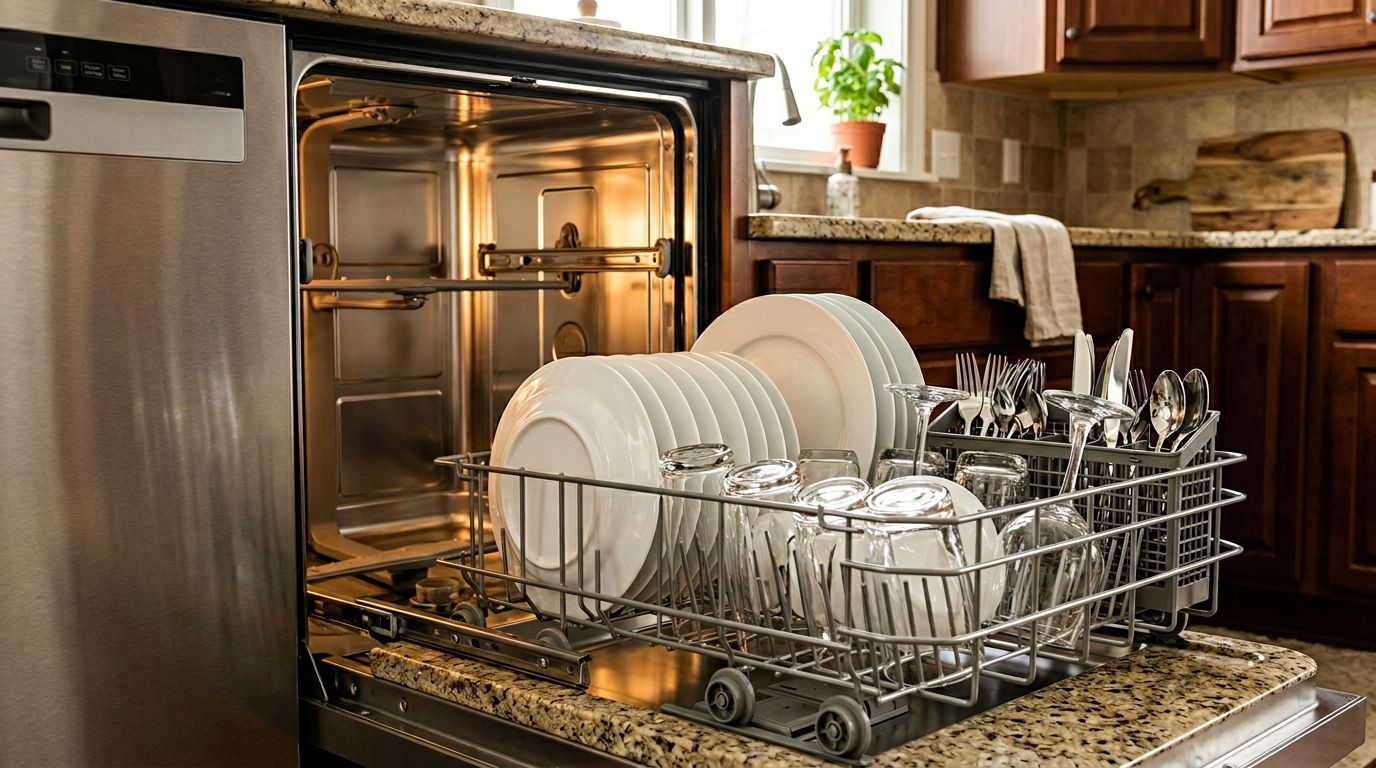 These are the questions we hear most often from homeowners dealing with dishwasher drain problems, and they’re worth addressing directly.
Is it normal to have standing water in the bottom of the dishwasher?
A small amount of water in the filter or sump area is normal and expected. Most manufacturers design this in intentionally to keep door seals from drying out. What’s not normal is an inch or more of water covering the entire bottom of the tub after a completed wash cycle. If you’re seeing that, something is blocking the drain system.
Can I just reset the dishwasher to fix the drainage issue?
Sometimes, yes. If the dishwasher was interrupted mid-cycle, a power outage hit during a wash, or the cycle was stopped early, the machine may not have reached the drain phase. Resetting the dishwasher and running a fresh cycle from the beginning can clear that up. Most machines reset by pressing and holding the cancel or start button for three to five seconds. If the problem persists after a reset and a fresh cycle, there’s an underlying cause that needs to be found.
How do I know if the drain pump has failed?
The clearest sign is silence during the drain cycle. Your dishwasher should produce a distinct humming or whirring sound when the pump is working. If you hear nothing, the motor may have failed. A grinding or buzzing sound with no water movement usually means something is jammed in the impeller. Both situations can sometimes be repaired by a homeowner, but they require pulling the machine apart, and at that point most people prefer to have a technician handle it.
Why does water back up into my sink when the dishwasher drains?
This usually means the drain line shared between the dishwasher and the sink is partially blocked, or the garbage disposal is full. Running the disposal clears the most common cause. If the sink backs up even after the disposal is clear, there may be a clog further down the drain line. That points to a plumbing issue, not the dishwasher itself.
How often should I clean the dishwasher filter?
Once a month is the standard recommendation for most households. If you run the dishwasher daily or tend to load dishes with a lot of food residue, you might want to check it every two to three weeks. Bosch, for example, specifically recommends monthly filter cleaning for their filtered models, and following that guidance prevents most drainage issues before they start.
Wrapping up
The good news about a dishwasher not draining is that most causes are findable and fixable without special tools or professional training. Start with the filter, check the disposal and hose, and work your way through the drain path systematically. You’ll catch the problem in the first few steps most of the time. If you’ve worked through everything and the machine still won’t move water, or if you suspect the drain pump has failed, that’s the point to bring in someone who can diagnose it properly. At Sardis Appliance Repair Chiliwack, we handle dishwasher repair, washer repair, fridge repair, and most other household appliance issues across Chiliwack and the surrounding area. If you’d rather not spend your evening disassembling things under the sink, or if you’ve already gone through the troubleshooting steps and still can’t find the cause, give us a call and we’ll help you figure out the fastest path to getting your kitchen back to normal.