 (604) 305-2992
 Schedule An Appointment
Your refrigerator stopped cooling, and now you’re staring at a warm fridge full of food that might not survive the night. Before you call for a repair, there are several things you can check yourself that could save you time, money, and a lot of frustration. Chiliwack homes see their share of appliance headaches, and a fridge that won’t cool is one of the most stressful. It happens without warning, usually on a warm afternoon when you’ve just stocked up on groceries. At Sardis Appliance Repair Chiliwack, we hear from homeowners dealing with this exact situation regularly, and the honest truth is that a surprising number of these calls turn out to be something the homeowner could have handled on their own with a bit of guidance. That doesn’t mean every warm fridge is a simple fix. Some are. Some aren’t. But starting with the basics before picking up the phone is always worth your time.
Key takeaways
- The ideal refrigerator temperature is between 33°F and 40°F, with 37°F being the sweet spot for keeping food safe and fresh.
- Dirty condenser coils are one of the most common and most overlooked causes of poor cooling, and cleaning them every six to twelve months can prevent the problem entirely.
- A fridge that runs constantly but still feels warm is telling you something specific, and it’s worth listening to before assuming the worst.
- After a reset, your refrigerator can take up to 24 hours to fully stabilize its temperature, so don’t panic if it doesn’t cool immediately.
- If your freezer is working but the fresh food section is warm, the problem is almost always in the airflow between the two compartments, not the compressor.
- Some repairs, like refrigerant leaks and compressor replacement, require specialized equipment and should not be attempted as DIY projects.
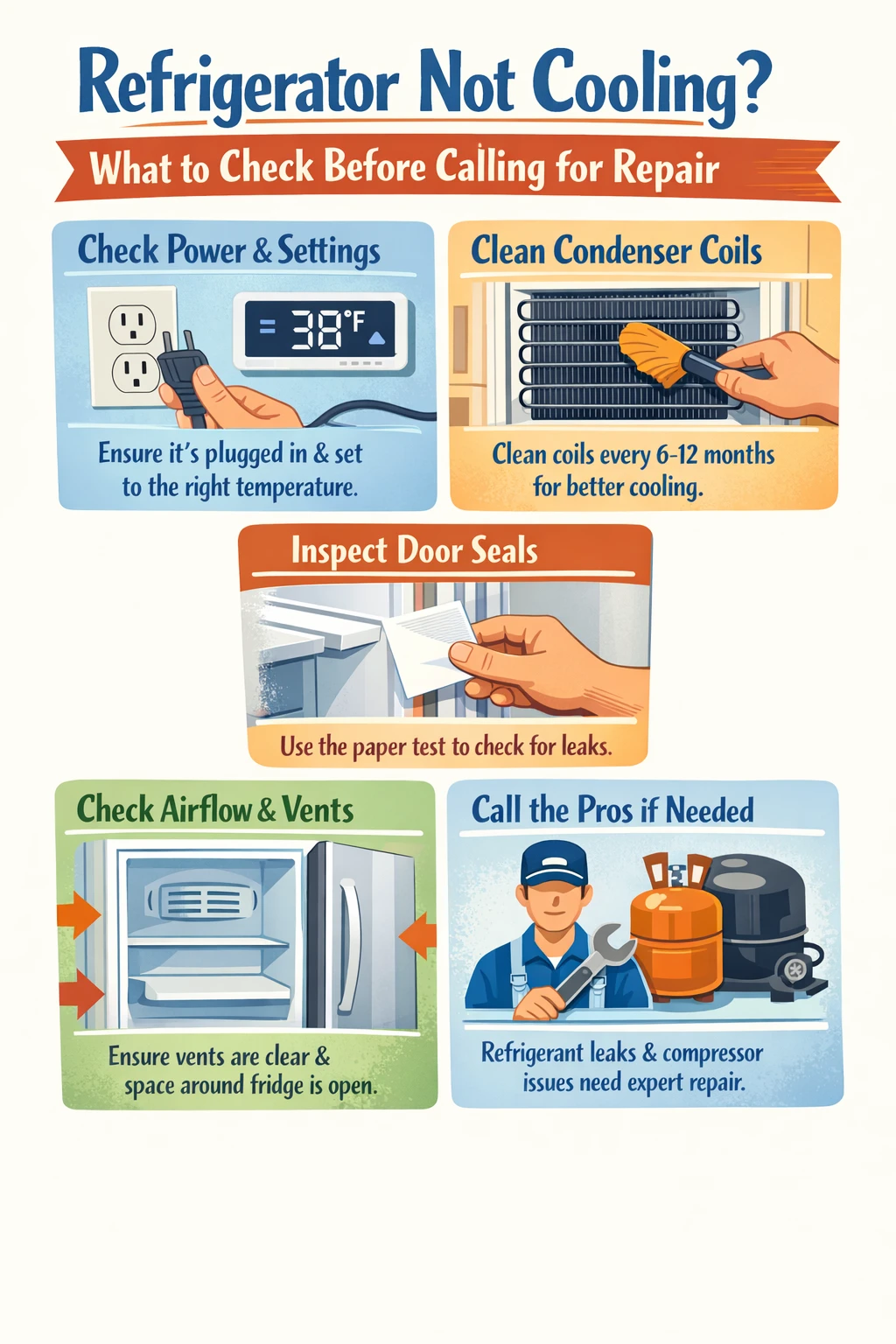
Why your fridge isn’t cooling: the short answer
 Most refrigerators that aren’t cooling properly have one of a handful of problems, and the majority of them start simple. Check the power, the temperature settings, and the condenser coils first. If none of those explain it, then you move deeper into the system. That’s the logical order, and it’s the same order a technician would follow. The fridge is a sealed system with several moving parts that all need to work together. The compressor compresses refrigerant vapor, which then circulates through coils, absorbs heat from inside the fridge, and releases that heat outside. If anything in that chain breaks down, or if airflow gets blocked anywhere along the way, cooling suffers. The good news is that the most common failure points are the easiest to access and fix. In our experience, about half the calls we get about a warm fridge turn out to involve something the homeowner could have addressed themselves. Blocked vents, a thermostat nudged out of range, condenser coils caked in dust. None of those require a service call.
Start here: the basic checks
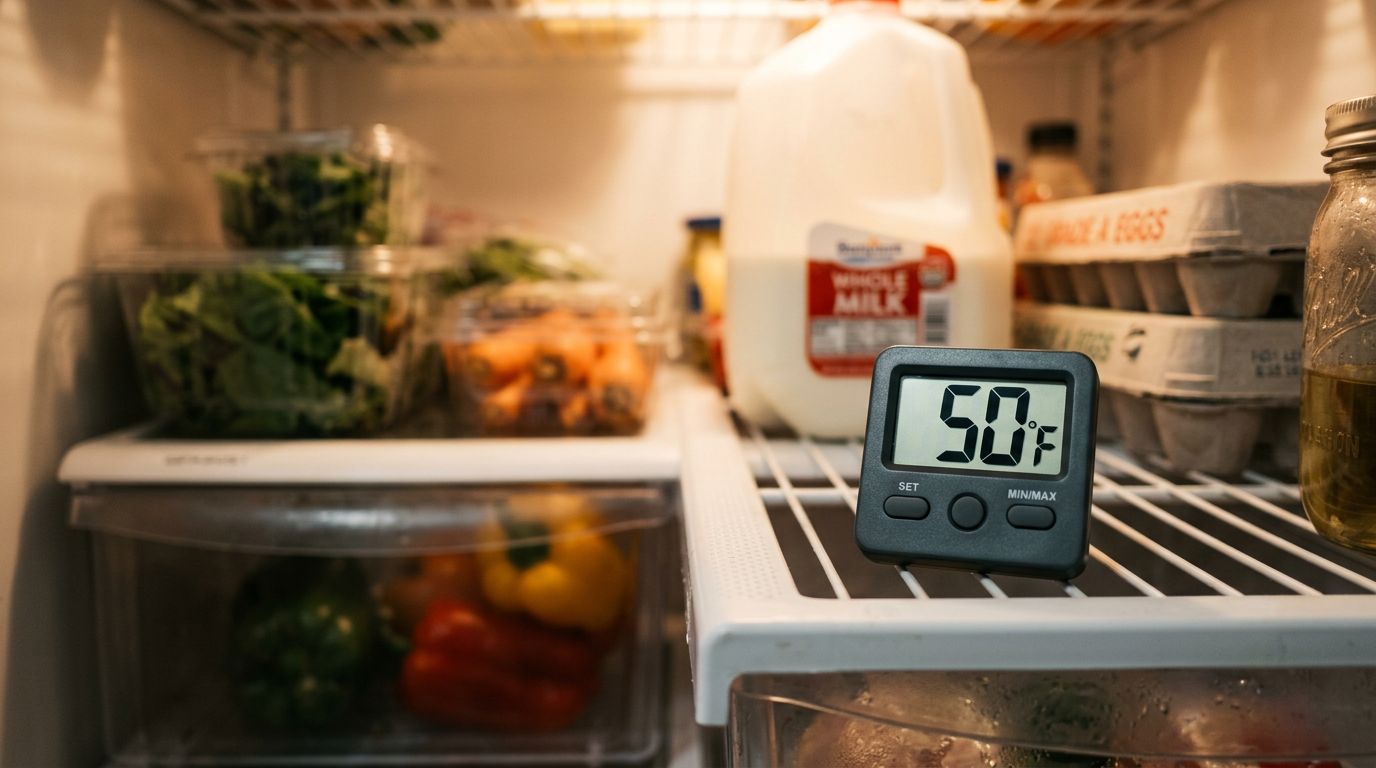
First things first. Before anything else, confirm the fridge is actually getting power. It sounds obvious, but a loose plug or a tripped breaker is more common than you’d think. Check that the unit is fully plugged in, then head to your breaker panel and look for any tripped circuits. If the interior light isn’t coming on, that’s a strong hint the problem is electrical. Next, check your temperature settings. The thermostat dial or digital control can get bumped accidentally, by a bag of groceries, a curious kid, or just leaning against the panel while unloading. Set the refrigerator to 37°F and the freezer to 0°F if yours has separate controls. Then give it time. Don’t expect immediate results. It can take a full 24 hours for the temperature to stabilize after a change. Also, think about what’s happened recently. Was hot food added to the fridge? Did someone leave the door open for an extended time? Did you just plug it back in after moving it? LG’s own support documentation notes that a newly installed refrigerator needs at least 24 hours to reach stable internal temperatures, and even longer if it was loaded with food at the same time. These aren’t malfunctions. They’re just physics.
Check the condenser coils
Now let’s get into one of the most overlooked maintenance tasks in the average home. The condenser coils do the work of releasing heat from the refrigerant out into the room. They’re usually located either underneath the fridge behind the toe grille, or along the back of the unit. Over time, they collect dust, pet hair, grease, and general household grime. When coils get coated, they can’t release heat efficiently. The compressor has to work harder to compensate, and the fridge starts losing its ability to maintain temperature. In some homes, especially those with pets or a dusty environment, this can happen surprisingly fast. The recommendation is to clean the coils every six to twelve months under normal conditions, and every two to three months if there’s significant pet traffic or grease in the air near the fridge. Cleaning them isn’t difficult. Unplug the fridge first. If the coils are underneath, remove the toe grille at the bottom front of the unit. Use a refrigerator coil brush to knock the dust loose, then vacuum it up. 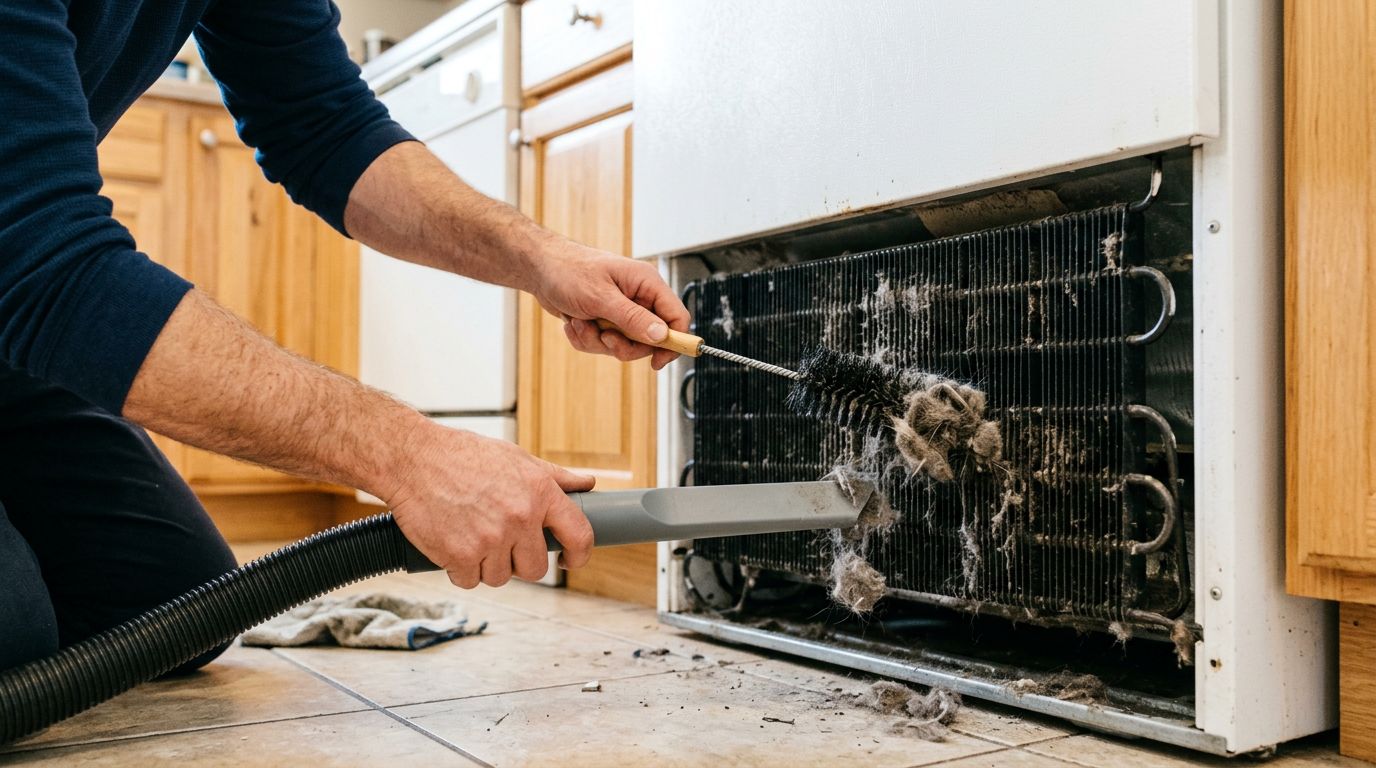 If the coils are at the back, gently vacuum them from behind. That’s it. It takes fifteen minutes and it’s one of the highest-impact maintenance tasks you can do for a refrigerator’s longevity.
Look at the door seals
The gasket is the rubber seal running around the perimeter of the fridge and freezer doors. Its job is to keep cold air in and warm air out. When it fails, the fridge has to run almost constantly just to hold its temperature, and it often still can’t manage it. Run your hand slowly around the door edges while the fridge is closed. Can you feel cold air escaping anywhere? You can also try the paper test: close the door on a piece of paper and try to pull it out. If it slides out easily, the seal isn’t gripping the way it should. Gaskets often fail in stages. First they get dirty, which prevents a tight seal. Cleaning them with warm soapy water can solve that immediately. If the gasket is cracked, torn, or deformed, cleaning won’t help and it’ll need to be replaced. Older homes in areas like Sardis and Promontory sometimes have older appliances with gaskets that have just worn out from years of use, and a new gasket is a relatively inexpensive fix compared to a service call for a more serious problem.
Check for blocked vents and airflow issues
Inside your fridge and freezer, there are vents that move cold air between compartments and throughout the interior. Pack the fridge too full, or push a bag of leftovers up against the back wall, and you can block those vents entirely. The fridge will keep running, but the cold air can’t circulate where it needs to go. Take a look inside both compartments and make sure nothing is jammed against the vents. Typically, vents are located on the back wall of the freezer or refrigerator, sometimes on the ceiling of the fresh food section. Your owner’s manual will show you exactly where yours are. 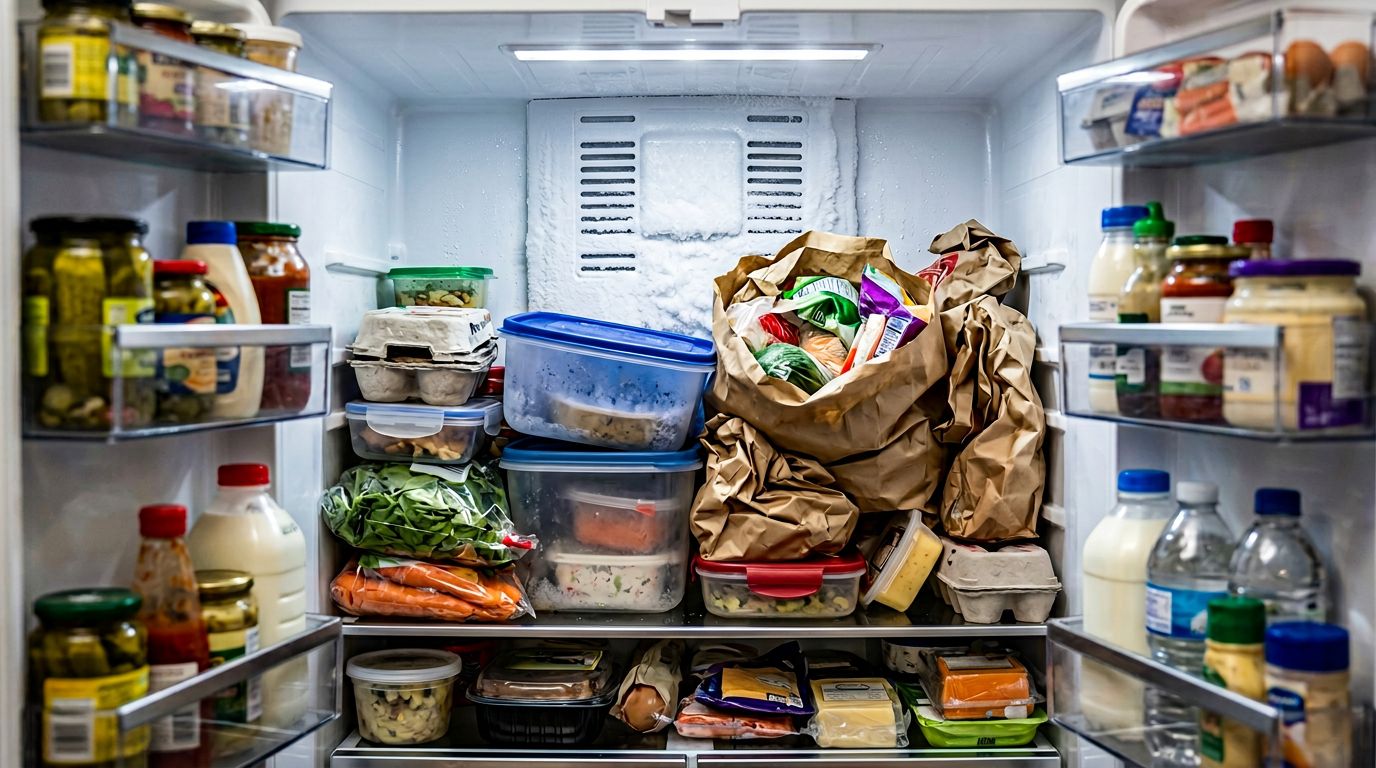 Also, check the clearance around the outside of the fridge. Refrigerators need at least half an inch of space on the sides and one inch at the back to breathe properly. If your fridge is wedged tight against a cabinet or a wall, it can’t release heat the way it needs to.
What if only the fridge is warm but the freezer is fine?
This is actually one of the more specific scenarios we run into, and it points to a particular part of the system. When the freezer is working but the fresh food section is warm, the problem is almost always airflow between the two compartments, not the compressor or refrigerant. The most common culprits are the evaporator fan, the air damper, or frost buildup blocking the evaporator coils. The evaporator fan sits behind the back wall of the freezer and pushes cold air into both sections. If it’s stopped working, the freezer stays cold because the coils are still there, but no cold air reaches the fridge. The air damper is a small door that controls how much cold air passes from the freezer to the fridge section. If it gets stuck closed, same result. Heavy frost buildup on the evaporator coils is also a common cause. You can sometimes see this as frost or ice on the freezer’s back wall or floor. If the self-defrost system fails, frost accumulates until it essentially insulates the coils, blocking airflow. A manual defrost, meaning unplugging the fridge and leaving the doors open for 24 to 48 hours, can confirm this. If the fridge cools normally after that, the defrost timer or defrost heater has likely failed.
When to stop troubleshooting and call someone
Some repairs are genuinely within reach for a careful homeowner. Cleaning coils, replacing a gasket, reorganizing the fridge, resetting the thermostat. These are all reasonable DIY territory. Others are not. Refrigerant leaks require specialized equipment and certified handling. You should not attempt to charge refrigerant yourself. A compressor replacement involves welded components and costs over $300 in parts alone, often more, and that’s before labor. If your compressor is running constantly without achieving temperature, or if it’s clicking on and off repeatedly in a cycle, those are signs of a failing compressor or start relay, and both warrant a professional diagnosis. Unusual noises are worth paying attention to. A steady hum or gentle hiss is normal. Loud banging, clicking that repeats every few minutes, or a compressor that sounds like it’s straining, those are warning signs. Similarly, if your circuit breaker trips repeatedly when the fridge runs, stop resetting it and get someone to look at it. We get calls from homeowners in Garrison Crossing and Vedder Crossing who’ve let a compressor-related problem run for weeks hoping it would sort itself out. It doesn’t. And by the time they call, there’s sometimes secondary damage to deal with.
Frequently asked questions
These are the questions we hear most often when someone calls about a refrigerator not cooling. They’re worth reading even if your situation seems straightforward.
How do I reset a refrigerator that’s not cooling?
Unplug the fridge or turn off the circuit breaker that supplies it, wait five to ten minutes, then restore power. Set the temperature to 37°F for the fridge and 0°F for the freezer. Then leave it alone for up to 24 hours. A reset can resolve minor glitches in temperature regulation, and it’s always worth trying before anything more involved. If there was heavy frost buildup, the reset needs to be longer. Leave the fridge unplugged with the doors open for 24 to 48 hours to allow everything to thaw completely. Have towels ready because the drip pan can overflow as ice melts. Once it’s fully thawed, plug it back in and monitor it over the next day.
Why is my fridge running constantly but not cooling?
A fridge that runs non-stop without achieving temperature is telling you that something is preventing the cooling cycle from completing. Common reasons include dirty condenser coils forcing the compressor to overwork, a refrigerant leak reducing the system’s capacity, or a compressor that’s running but not pumping efficiently. It can also be caused by a door seal that’s leaking, making the fridge work continuously just to offset warm air coming in. Start with the easy checks: coils, gaskets, temperature settings, clearance space. If those are all fine and the fridge is still running constantly, it’s time to call for a professional diagnosis. Letting a struggling compressor run indefinitely can shorten its remaining lifespan.
Is a warm fridge always a sign of a big repair?
Not at all. A large portion of the cases we see turn out to be something simple. A blocked vent, a dirty coil, a gasket that needs cleaning or replacement, even a temperature control that got bumped to the wrong setting. These are all inexpensive to fix and sometimes free. The repairs that get expensive are refrigerant leaks, compressor failures, and circuit board issues. But those tend to come with more obvious warning signs, like the fridge running non-stop, unusual noises, or the circuit breaker tripping. If the fridge is just a bit warmer than usual and everything else seems normal, work through the basic checks before assuming the worst.
How do I know if my compressor is failing?
A few signs point fairly clearly to a compressor problem. The fridge runs continuously without reaching the set temperature. The compressor makes unusually loud or irregular noises. The compressor itself feels extremely hot to the touch. The circuit breaker trips when the fridge tries to run. You might also notice the fridge clicking on for a few seconds and then shutting off, over and over, which typically indicates a bad start relay, a small and inexpensive component attached to the compressor that’s sometimes worth replacing before condemning the compressor itself. According to the FDA’s food safety guidelines, a refrigerator’s temperature should stay at 40°F or below. If yours can’t hold that despite everything working as it should, a compressor issue is likely involved and a technician should have a look.
Wrapping up
A refrigerator not cooling is stressful, but it’s rarely cause for immediate panic. Start with the simple checks: power, temperature settings, condenser coils, door seals, and blocked vents. Work through them systematically, and you’ll either find the problem yourself or at least rule out the easy stuff before spending money on a service call. The reset procedure costs nothing and occasionally solves the problem entirely. If you’ve been through all of that and the fridge still isn’t cold, or if you’re hearing sounds that don’t seem right, that’s when it makes sense to bring in a professional. At Sardis Appliance Repair Chiliwack, we handle fridge repair Chiliwack homeowners call us about regularly, along with washer repair, dryer repair, and most other household appliances. Give us a call and we’ll help you figure out what’s actually going on and what it’ll take to fix it properly.