 (604) 305-2992
 Schedule An Appointment
Ever wonder why your appliances seem to pick the worst possible moments to break down, like during that December dinner party when the dishwasher decides to flood your kitchen? Understanding the winter appliance crisis and how cold weather affects your household workhorses could save you from those emergency repair bills that make holiday spending look reasonable! Winter in Chilliwack brings more than just beautiful snow-capped mountains and cozy evenings by the fireplace. The Fraser Valley’s unique climate creates a perfect storm of conditions that can turn your reliable appliances into expensive problems waiting to happen. From freezing temperatures that affect outdoor units to indoor humidity fluctuations that stress internal components, our coastal winter weather presents challenges that many homeowners don’t see coming until it’s too late. The combination of temperature swings, increased usage during holiday entertaining, and moisture-related issues creates what appliance repair professionals call “winter breakdown season.” Understanding these seasonal threats and taking proactive steps can mean the difference between enjoying your winter months and dealing with costly emergency repairs when every technician in town is booked solid.
Key Outtakes:
- Freezing temperatures can damage water lines, seals, and outdoor appliance components, leading to expensive repairs or replacements
- Indoor humidity changes during winter heating season stress appliance motors, electronics, and moving parts
- Increased appliance usage during holidays and winter entertaining accelerates wear on already-stressed systems
- Chilliwack’s coastal climate creates unique moisture and temperature challenges that differ from inland winter conditions
- Simple preventive maintenance performed before winter can prevent most cold weather appliance failures
How Cold Weather Attacks Your Appliances
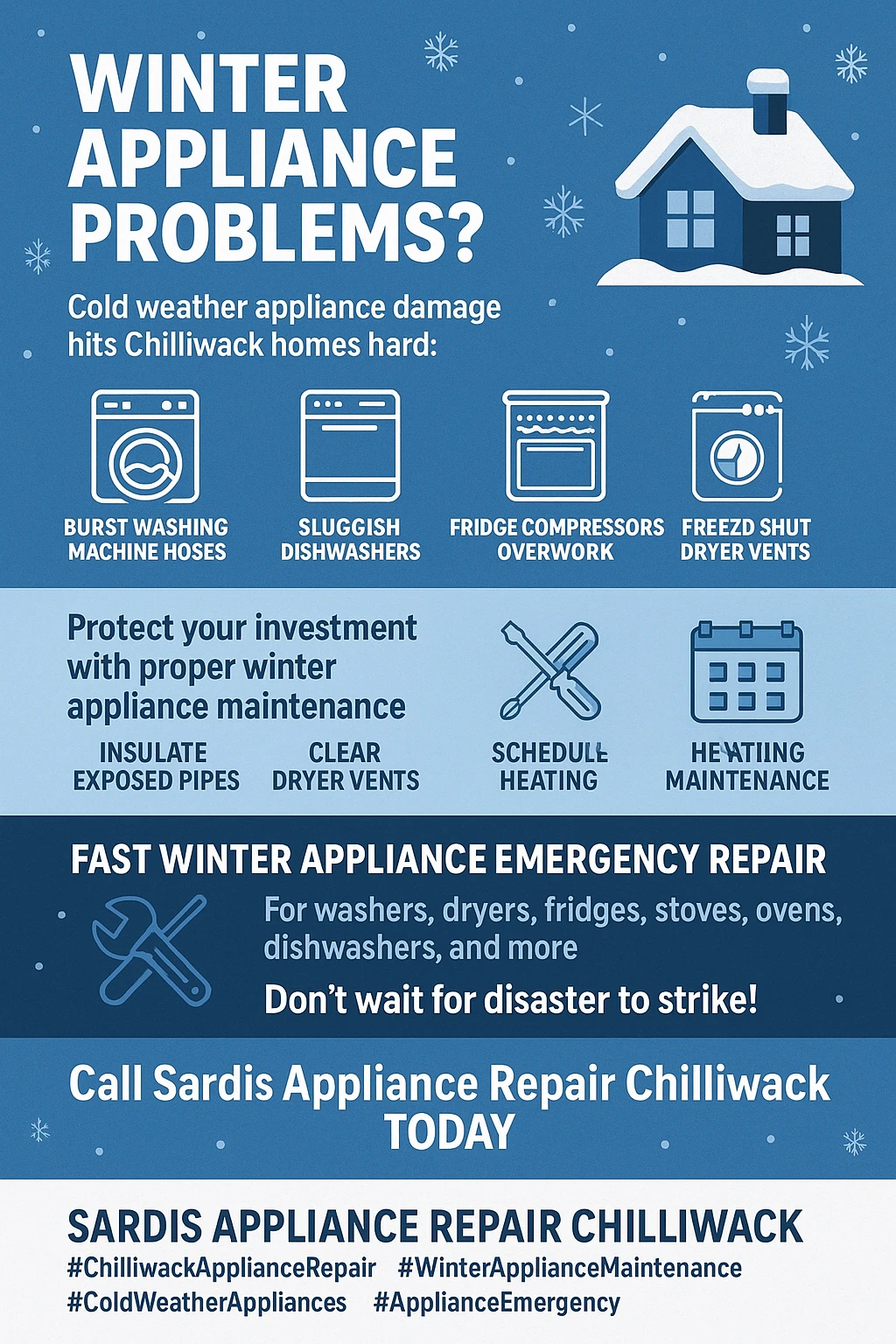
 Winter doesn’t just make your heating bill skyrocket – it launches a full-scale assault on every appliance in your home, often in ways that aren’t obvious until the damage is already done. Think of your appliances as being designed for consistent, moderate conditions, then imagine subjecting them to the temperature roller coaster that defines Chilliwack winters. The results aren’t pretty, and they’re definitely not cheap to fix. Freezing temperatures create immediate threats to any appliance with water connections or outdoor components. Your washing machine’s inlet hoses, dishwasher supply lines, and refrigerator ice maker connections all become vulnerable when temperatures drop below freezing. Water expands when it freezes, and that expansion can crack pipes, damage valves, and destroy internal components faster than you can say “emergency plumber.” Even appliances located in heated areas can suffer damage if they’re positioned near exterior walls or in basements where cold air infiltrates through gaps and cracks. The freeze-thaw cycle that’s so common in our coastal climate adds another layer of complexity to winter appliance problems. Professional repair services report seeing increased failures from components that repeatedly expand and contract as temperatures fluctuate around the freezing point. This constant movement stresses seals, gaskets, and joints beyond their design limits, creating leaks and mechanical failures that often don’t show up until spring when you’re already dealing with other seasonal maintenance issues.
Indoor Climate Changes That Stress Your Appliances
 While everyone focuses on outdoor temperatures, the real appliance killer might be lurking inside your cozy, heated home. Winter heating systems don’t just warm your living spaces – they create dramatic humidity and air quality changes that can wreak havoc on appliance electronics, motors, and sensitive components. Most homeowners have no idea that their efforts to stay comfortable are slowly destroying their major appliances. Forced-air heating systems are particularly problematic because they circulate dry, heated air throughout your home, creating static electricity and moisture imbalances that appliance circuits weren’t designed to handle. Electronics in modern appliances, from digital displays to computerized control boards, become vulnerable to static discharge and component failure when humidity levels drop too low. The same dry conditions that make your skin feel parched can cause rubber seals and gaskets to become brittle and crack, leading to leaks and performance issues. Conversely, homes that rely on humidifiers or have poor ventilation can create the opposite problem – excess moisture that promotes corrosion, mold growth, and electrical shorts. Appliances located in basements, laundry rooms, or kitchens become particularly vulnerable when warm, moist air encounters cold surfaces and condenses where it shouldn’t be. This moisture infiltration can destroy electronic components, cause rust in metal parts, and create conditions for bacterial growth that affects both performance and health. The temperature differentials created by heating systems also affect appliance operation in subtle but important ways. Motors work harder when ambient temperatures fluctuate, refrigeration systems struggle to maintain consistent temperatures when room conditions change rapidly, and water heaters cycle more frequently to compensate for heat loss to cold surroundings. These operational stresses add up over time, reducing appliance lifespan and increasing the likelihood of mid-winter failures.
Increased Usage Stress During Winter Months
 Just when cold weather is already putting extra stress on your appliances, winter lifestyle changes mean you’re asking them to work harder than ever. The combination of holiday entertaining, increased indoor time, and seasonal cooking demands creates a perfect storm of usage that can push already-stressed appliances past their breaking point. Understanding these usage patterns can help you manage the load and prevent overworked appliances from failing at the worst possible moments. Holiday entertaining season brings dramatic spikes in appliance usage that many units simply aren’t designed to handle on a regular basis. Your dishwasher, which might normally run once a day, suddenly gets loaded three times during your holiday party. The washing machine that usually handles weekly laundry loads gets pressed into service for tablecloths, guest linens, and party cleanup. Your oven and cooktop, already working overtime for holiday meal preparation, face continuous use that tests their thermal management systems and electrical components. The extended indoor time that winter weather encourages also changes how families use their appliances. Washing machines handle heavier loads of winter clothing, boots, and outerwear that strain motors and suspension systems. Dryers work harder to handle thick fabrics and damp items that take longer to dry, often running back-to-back cycles that can overheat motors and lint filtration systems. Even smaller appliances like coffee makers and kitchen electrics see increased usage as people spend more time at home. This increased demand becomes particularly problematic in Chilliwack neighborhoods like Sardis and Promontory, where many homes were built during periods when appliance expectations were lower and electrical systems weren’t designed for today’s usage patterns. Older homes may lack the electrical capacity to support multiple high-demand appliances running simultaneously, creating power quality issues that can damage sensitive electronics and reduce appliance lifespan significantly.
Regional Winter Challenges Specific to Chilliwack
Living in the Fraser Valley means dealing with winter appliance challenges that differ significantly from what you’d face in other parts of British Columbia or Canada. Our unique coastal climate creates specific conditions that can catch even experienced homeowners off guard, particularly if they’ve moved here from areas with more predictable winter weather patterns. Understanding these regional factors helps explain why standard winter preparation advice often falls short in our area. Chilliwack’s proximity to the coast means we experience frequent temperature fluctuations that create more appliance stress than steady cold conditions would. When temperatures swing from below freezing overnight to above freezing during the day, appliances with water connections face repeated freeze-thaw cycles that stress components beyond their design limits. This is particularly problematic for outdoor heat pump systems, which struggle with efficiency when temperatures hover around freezing and can accumulate ice that blocks airflow and damages components. The Fraser Valley’s topography also creates unique moisture conditions that affect appliance operation throughout winter. Cool, moist air from the coast meets warmer air from inland areas, creating fog, condensation, and humidity levels that fluctuate dramatically within short time periods. Appliances located in basements, garages, or poorly insulated areas can face rapid moisture changes that promote corrosion, electrical shorts, and component failures that wouldn’t occur in more stable climates. Our region’s combination of marine and mountain influences means winter storms can bring everything from freezing rain to heavy wet snow, each creating different challenges for appliances. Power outages from ice storms can damage appliances when power is restored if surge protection isn’t adequate. Heavy snow loads on homes can affect ventilation systems and outdoor appliance units, while freezing rain can coat outdoor components with ice that interferes with normal operation and can cause permanent damage.
Preventive Maintenance for Winter Appliance Protection
The best defense against winter appliance failures is a proactive maintenance approach that addresses seasonal challenges before they become expensive problems. Most winter appliance issues are completely preventable with the right preparation, but the key is understanding which maintenance tasks matter most for our specific climate conditions and performing them at the right time. Water system protection should be your first priority when preparing appliances for Chilliwack’s winter conditions. This means insulating any water supply lines that run through unheated areas, checking connections for signs of wear or corrosion, and ensuring proper drainage from appliances that use water. For washing machines and dishwashers, inspect hoses for cracks or brittleness that could lead to failures when cold weather strikes. Consider upgrading to braided steel supply lines if you’re still using rubber hoses, as they’re much more resistant to temperature-related failures. Cleaning and lubrication tasks become even more important before winter because cold weather reduces the effectiveness of lubricants and increases stress on moving parts. Clean dryer vents thoroughly to prevent lint buildup that can restrict airflow and cause overheating when the unit works harder in cold conditions. Check refrigerator coils and ensure adequate clearance for air circulation, as these systems work harder when ambient temperatures fluctuate. For residents in areas like Vedder Crossing where humidity can be higher, pay special attention to moisture-prone areas and consider using moisture-absorbing products in appliance areas. Electrical system checks help prevent failures when winter usage patterns stress your home’s power supply. Inspect outlet connections, especially for high-demand appliances like electric dryers and ranges, looking for signs of arcing, corrosion, or loose connections that could fail under increased load. Test GFCI outlets regularly, as moisture and temperature changes can affect their operation. Consider having an electrician evaluate your electrical panel’s capacity if you’re planning to add space heaters or other seasonal electrical loads that could stress circuits shared with major appliances.
Frequently Asked Questions
What temperature is too cold for appliances to work properly?
Most household appliances begin experiencing performance issues when ambient temperatures drop below 10°C (50°F), though this varies by appliance type and age. Refrigerators and freezers can struggle when room temperatures drop below 15°C (60°F) because their thermostats aren’t calibrated for extremely cold conditions. Washing machines and dishwashers face immediate risk of freeze damage when temperatures reach 0°C (32°F), particularly if water remains in supply lines or internal components. For appliances located in garages, basements, or other unheated areas, consider relocating them to heated spaces during extreme cold snaps or ensure adequate space heating and insulation. Even brief exposure to freezing temperatures can cause permanent damage to water lines and internal components.
How can I tell if cold weather has damaged my appliances?
Cold weather damage often shows up gradually, but there are warning signs to watch for throughout winter. Listen for unusual noises, especially grinding, squealing, or banging sounds that weren’t present before cold weather arrived. Check for water leaks around appliances, particularly after the first freeze of the season, as this often indicates cracked lines or damaged seals. Performance changes like longer cycle times, incomplete operation, or temperature control issues can signal cold weather stress. If your refrigerator isn’t maintaining proper temperatures, your washing machine isn’t filling completely, or your dryer takes longer than usual, cold weather may have affected internal components that require professional attention.
Should I run appliances differently during winter months?
Winter operation adjustments can significantly extend appliance life and prevent failures. Allow extra time for appliances to warm up before use, particularly if they’re located in cold areas. Run washing machines and dishwashers at slightly warmer temperatures to compensate for colder inlet water, but avoid maximum heat settings that can stress components. For dryers, clean lint filters more frequently during winter as thicker clothing produces more lint, and ensure adequate ventilation since cold outdoor air affects exhaust efficiency. Consider running appliances during warmer parts of the day when possible, and avoid overloading units that are already working harder due to environmental stress.
Wrapping Up
Winter appliance failures don’t have to be an inevitable part of Fraser Valley living when you understand the specific challenges our climate presents and take proactive steps to protect your investments. By addressing water system vulnerabilities, managing indoor climate effects, and adjusting usage patterns for seasonal demands, you can keep your appliances running smoothly throughout even the harshest Chilliwack winters. When prevention isn’t enough and you need expert repair services that understand our regional challenges, Sardis Appliance Repair Chilliwack provides experienced, reliable service to get your essential appliances back up and running quickly, so you can focus on enjoying winter instead of worrying about the next breakdown.